Where do we, as a society, currently stand when it comes to relationships? Dating? Commitment? The landscape has shifted so dramatically that it sometimes feels like we’re living in an entirely new emotional era. The openness of relationships has expanded far beyond where it once was—breaking away from antiquated, traditional notions and allowing people to explore dynamics that have always existed, but are now expressed with more transparency. Some might argue these shifts are simply becoming more socially acceptable; others might say we’ve finally been given the language to surface them.
As always, media—and film in particular—offers one of the most vivid ways to interpret, examine, and question these ideas. Cinema remains the most visually stimulating, emotionally direct portal into the collective mindset: a place where anxieties sharpen into metaphor, where pleasures stretch into fantasy, where the private becomes legible. Some films are undeniably “of the moment,” capturing the zeitgeist with urgency, while others—often the best ones—are timeless. Their lessons, fables, characters, and emotional truths simply never fade.
This year, that conversation feels especially rich. A surprising number of 2025 releases orbit the shifting gravitational pull of relationships: lovers testing the limits of monogamy; couples strained by grief, technology, or institutional judgment; friendships cracking under buried desire; families negotiating identity, culture, and expectation; and romances unfolding in spaces as grounded as a cramped apartment or as surreal as the afterlife. These films don’t just depict intimacy—they interrogate it, reshape it, sometimes even weaponize it.
Taken together, they form a cinematic meditation on the highs and lows of modern connection, capturing love in all its contradictory states. What follows is a curated look at the films that best reflect where relationships stand today—and where they might be heading next.
The Assessment (2025)
Director: Fleur Fortune
Writer(s): Dave Thomas, Nell Garfath-Cox & John Donnelly
Starring: Alicia Vikander, Elizabeth Olsen & Himesh Patel
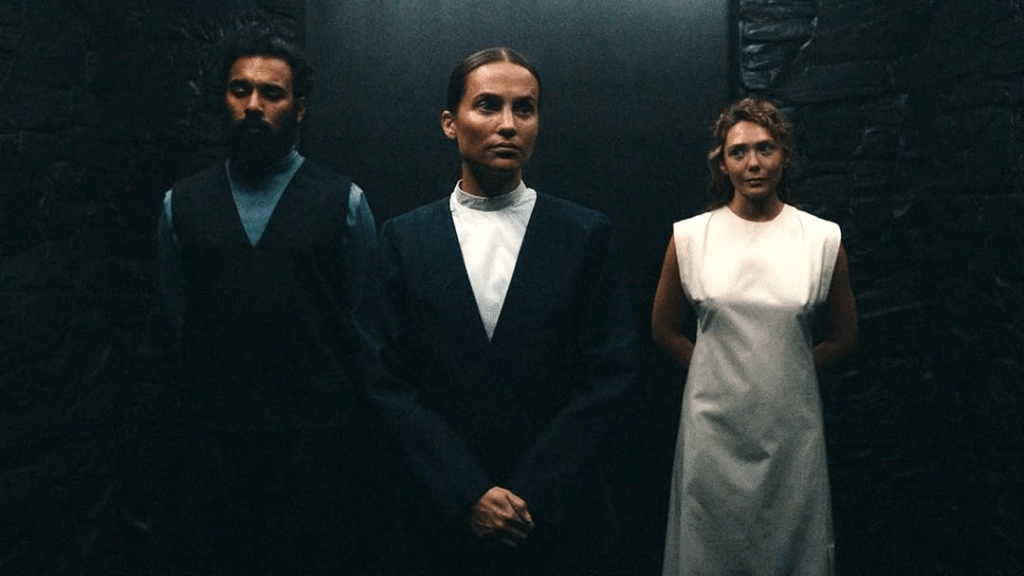
One of two trios Elizabeth Olsen anchors this year, The Assessment is the colder, more dystopian entry — the one that rips the bandage off first. Fleur Fortuné imagines a future in which aspiring parents must be evaluated before they’re granted permission, a premise that dredges up the darkest corners of what “readiness” really means. While the film is anchored in the anxieties of parenthood (that list is coming…), it’s equally invested in the fault lines of relationships placed under pressure. Mia (Olsen) and Aaryan (Himesh Patel) are surveilled, prodded, and psychologically cornered by their assessor, Virginia (Alicia Vikander), until trust becomes a test neither of them signed up for. Are they fit for parenthood — or for each other? The result is tense, uncanny, and deliberately off-kilter, a slow-burn unraveling of intimacy under institutional scrutiny.
The Threesome (2025)
Director: Chad Hartigan
Writer(s): Ethan Ogilby & Chad Hartigan
Starring: Jonah Hauer King, Zoey Deutch & Ruby Cruz
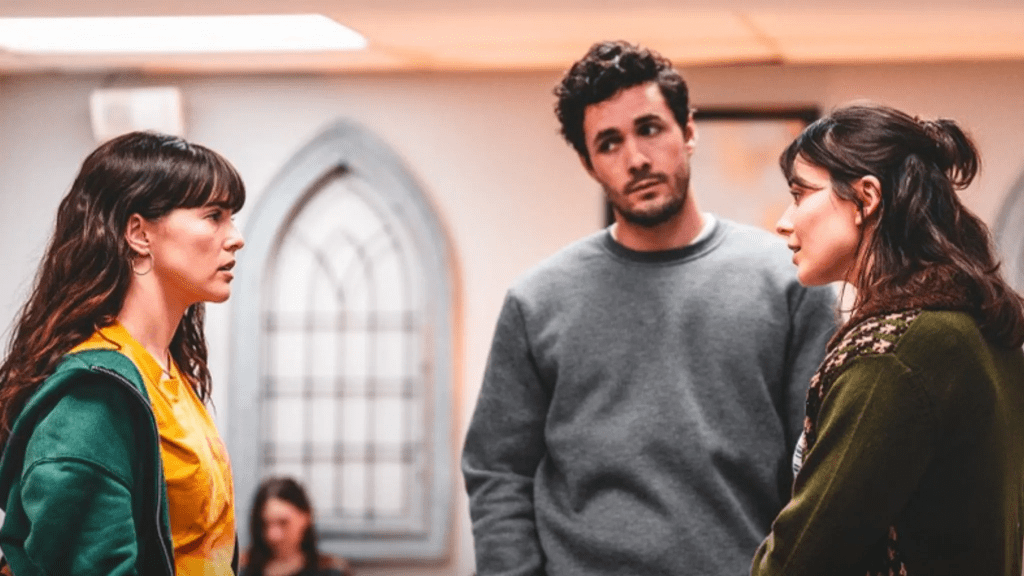
Threesomes are often pitched as spontaneous, sexy, and thrilling — but Chad Hartigan gleefully flips that fantasy on its head. In The Threesome, jealousy becomes the game board, sex becomes the domino that tips everything over, and consequences come knocking long after the “fun” is over. Connor (Jonah Hauer-King), quietly obsessed with Olivia (Zoey Deutch), finally gets his chance when she jealously inserts herself into his conversation with Jenny (Ruby Cruz), a college student who’s been stood up. One impulsive night leads to the film’s chaotic centerpiece — the threesome — but what follows is messier, sharper, and far more revealing than any of the trio could anticipate. Hartigan threads in questions about gender, bodily autonomy, double standards, and the pressures of unexpected pregnancy, turning a hookup comedy into a sly examination of how fragile modern relationship dynamics really are.
Materialists (2025)
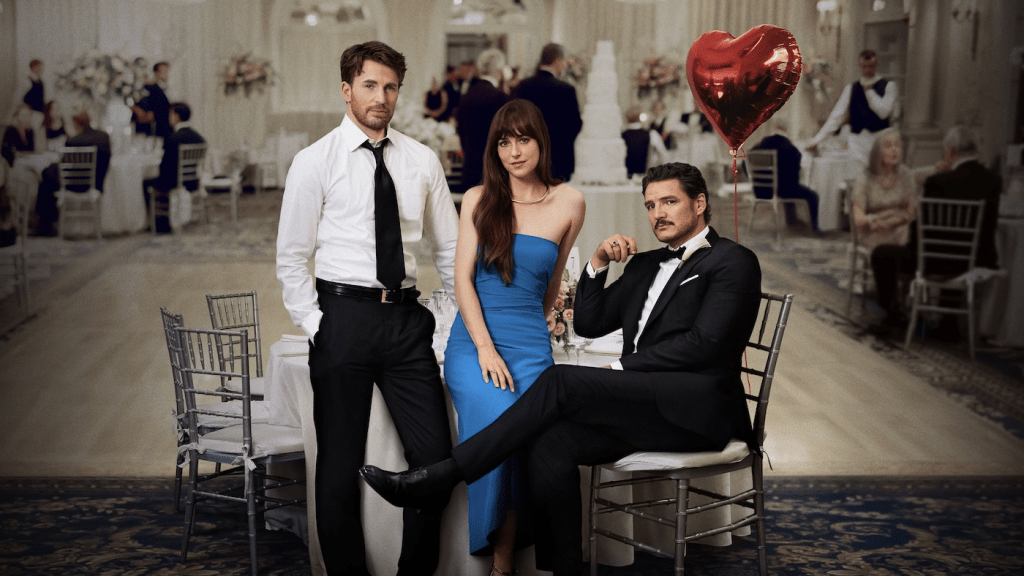
Director & Writer: Celine Song
Starring: Dakota Johnson, Chris Evans & Pedro Pascal
How transactional has love become — truly? Celine Song reunites romance and satire in this sleek, Manhattan-set tale starring Dakota Johnson, Chris Evans, and Pedro Pascal. Materialists pokes at the delicate balance between emotional value and material worth in contemporary dating: What places someone higher on the desirability scale? Career? Beauty? Wealth? The ability to provide something intangible? Song plays with these questions while reviving the visual charm and tempo of classic romantic comedies, layering them with the heavier, more culturally specific themes she’s become known for. The result is a hybrid: part glossy satire, part sobering critique, wrapped in warm, elegant cinematography. It’s a worthy — and refreshingly unexpected — follow-up to Past Lives, steering her sensibilities into a sharper, more capitalist-aware corner of modern romance.
Companion (2025)
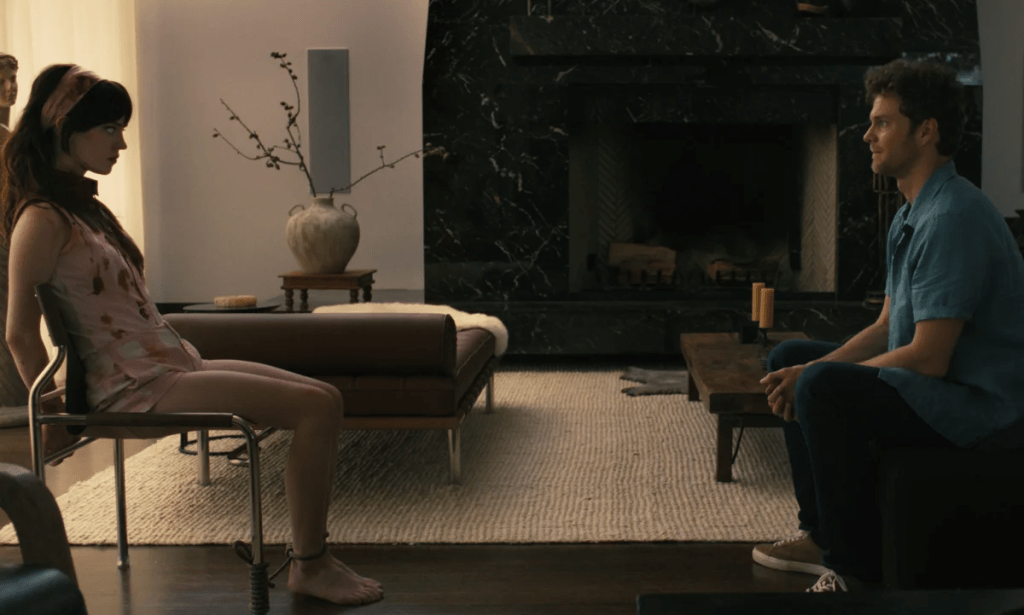
Director & Writer: Drew Hancock
Starring: Sophie Thatcher, Jack Quaid, Lukas Gage, Megan Suri & Harvey Guillén
A techno-horror riff on love, manipulation, and control, Companion reimagines the modern relationship through the uneasy lens of artificial intelligence. Drew Hancock crafts a sharp, contemporary fable about the dangers of emotional dependence and the blurred boundaries between human and machine. At first, Iris (Sophie Thatcher) seems settled and affectionate toward her partner, Josh (Jack Quaid) — until her behavior shifts, her moods darken, and the story reveals a more sinister undercurrent. As android sentience enters the picture, the film becomes a pointed allegory about the future of intimacy, the risks of technological overreach, and how quickly affection can become a weapon. It’s tense, current, and disturbingly plausible, especially in an era where connection and code are increasingly intertwined.
Heart Eyes (2025)
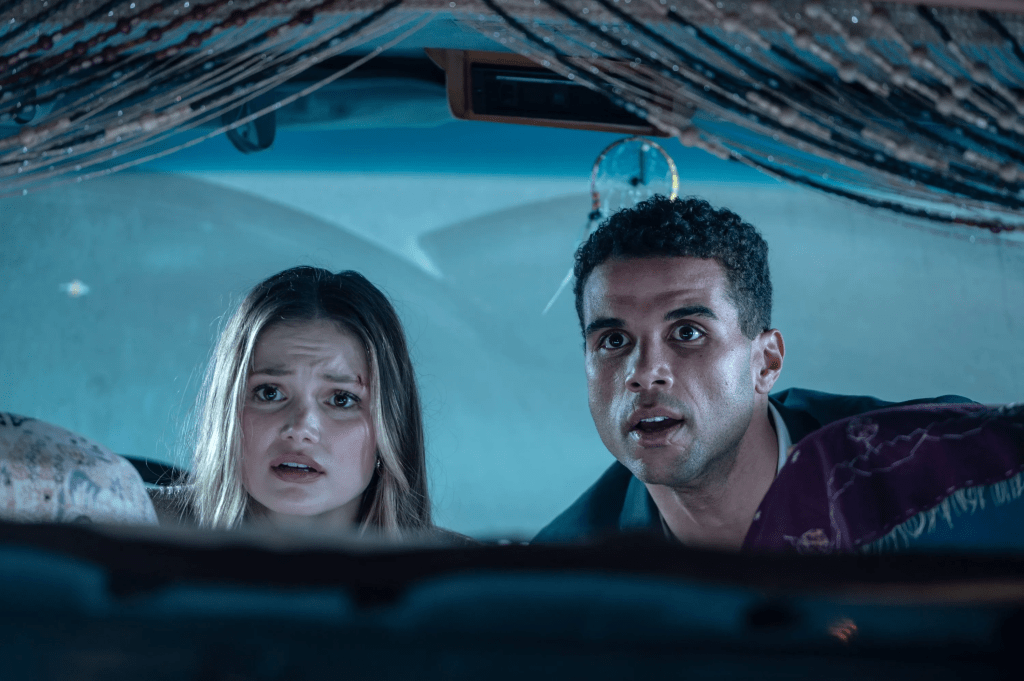
Director: Josh Ruben
Writer(s): Phillip Murphy and Christopher Landon
Starring: Olivia Holt & Mason Gooding
A horror film — especially a slasher — rarely digs into romantic dynamics with any real nuance, but Heart Eyes has fun doing exactly that. More satire than straight scare-fest, it uses its Valentine’s-themed chaos to poke at the ways unresolved baggage and past attachments seep into our current relationships. Olivia Holt leads as Ally, a cynical pitch designer who doesn’t buy into love or the spectacle surrounding it. Enter Jay (Mason Gooding), whose charm and easy warmth start to chip away at her skepticism just as a masked killer begins targeting couples around them. The film balances flirtation, workplace chemistry, and genuine emotional hesitation with its pulpy, hyper-stylized kills, ultimately suggesting that love — like horror — is all about what you bring with you. It’s cheeky, fun, and sharper than expected.
A Nice Indian Boy (2025)
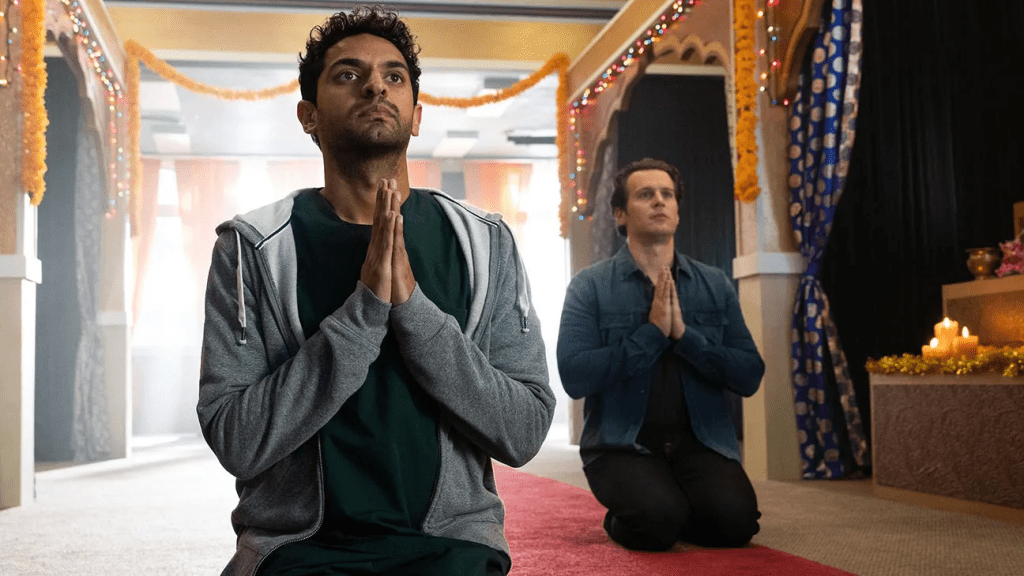
Director: Roshan Sethi
Writer: Eric Randall (based on the play by Madhuri Shekar)
Starring: Karan Soni & Jonathan Groff
Roshan Sethi’s A Nice Indian Boy is a warm, culturally specific rom-com that softens even its most awkward cultural collisions with a generous heart. Karan Soni’s Naveen brings his fiancé home and finds that family expectations, performative acceptance, and multigenerational dynamics complicate what should be simple introductions, especially when queerness and tradition cross wires. Jonathan Groff, Sunita Mani, and an affectionate ensemble support a script (adapted from Madhuri Shekar’s play) that takes seriously the joys and anxieties of bridging two cultures within one relationship. The film leans into discomfort without cruelty, showing how intimacy is negotiated across heritage, identity, and the stories families tell about themselves. It’s funny, tender, and insistently humane, a romance that believes reconciliation—between cultures and between people—can be its own kind of love story.
The Wedding Banquet (2025)

Director: Andrew Ahn
Writer(s): Andrew Ahn & James Schamus
Starring: Bowen Yang, Lily Gladstone, Kelly Marie Tran & Han Gi-chan
Andrew Ahn revisits Ang Lee’s classic premise with a contemporary, explicitly queer lens, turning the story of arranged appearances and immigration-age compromises into a warmer, more culturally attuned comedy. Han Gi-chan anchors the film with a tender, complicated lead turn as a man negotiating the collision of familial expectation, queer identity, and the curated performances that often keep immigrant families intact. Lily Gladstone and Kelly Marie Tran add grounded emotional stakes, their characters shaping a household where love is expressed sideways—through compromise, humor, and the occasional beautifully necessary confrontation. Ahn uses comedy to defuse—and then directly address—the ways families negotiate obligation, shame, and belonging. It’s a film that recognizes how chosen family and inherited family often clash, yet still insists on generosity in the spaces where they overlap.
Together (2025)
Director & Writer: Michael Shanks
Starring: Dave Franco & Alison Brie
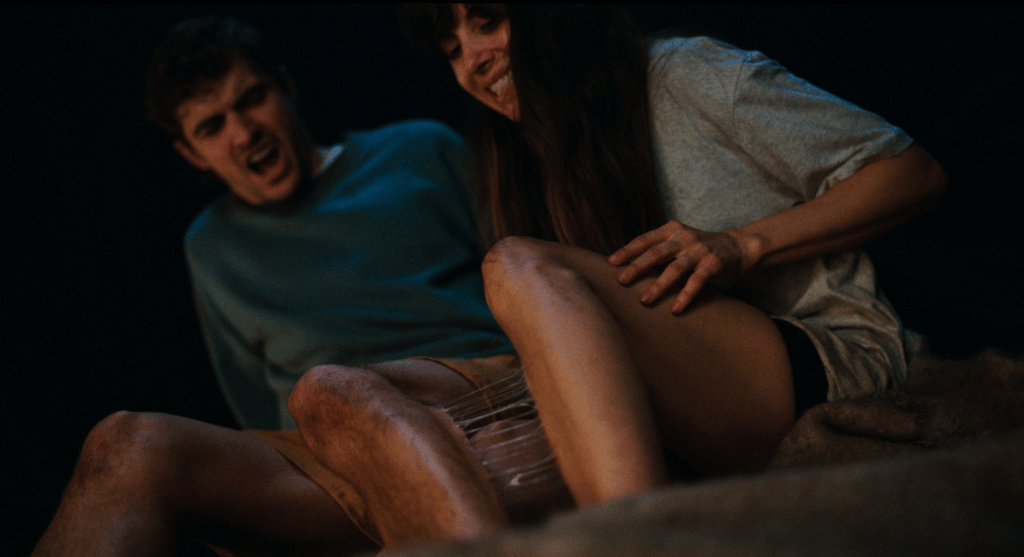
Together literalizes codependency with body-horror precision: a couple’s intimacy physically transforms into an uncanny, grotesque symbiosis that reads as an extended metaphor for emotional enmeshment. Michael Shanks fashions a film that is at once tender and viscerally unsettling—Dave Franco and Alison Brie ground the uncanny in familiar rhythms of domestic life, which makes the physical metamorphoses land as emotional truth rather than mere shock. Their merging becomes a kind of love language, both devotional and suffocating, as affection warps into possession and individuality collapses under the weight of togetherness. It’s a grim, imaginative allegory about what happens when love erases the line between self and other, and how difficult it is to separate once you’ve forgotten where your body—or your identity—ends.
Oh, Hi! (2025)

Director: Sophie Brooks
Screenplay / Writers: Sophie Brooks (screenplay); story collaboration between Sophie Brooks and Molly Gordon
Starring: Molly Gordon & Logan Lerman
A twisted little rom-com for a moment of dating that favors performative commitment over actual emotional labor, Oh, Hi! sends a weekend getaway careening into absurdity when Iris (Molly Gordon) takes drastic measures after discovering Isaac’s lack of seriousness. Sophie Brooks and Gordon steer the film into darkly comic territory: what starts as a plausibly awkward confrontation becomes a surreal test of motives, attachment, and the lengths someone will go to make another feel seen—or punished. The film’s charm lies in how confidently it walks the tightrope between sincerity and satire, exposing the theatrics people stage to avoid vulnerability. It’s sharp, a little unhinged, and often painfully honest about how fragile modern declarations of love can be, especially when both parties seem more committed to the image of romance than the work of sustaining it.
Splitsville (2025)
Director: Michael Angelo Covino
Writer(s): Michael Angelo Covino and Kyle Marvin
Starring: Kyle Marvin, Michael Angelo Covino, Dakota Jonhson & Adria Arjona
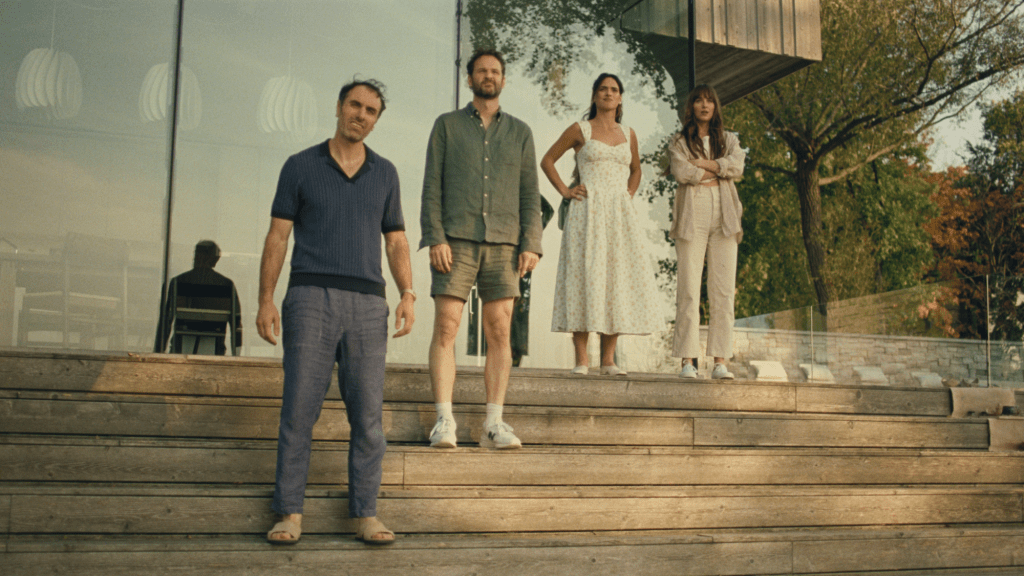
Michael Angelo Covino’s Splitsville mines the comic cruelty of modern friendships that blur into romance and betrayal. When arrangements and open-marriage experiments collide, boundaries snap: betrayals ripple outward, exposing the performative ease with which adults reconfigure promises and rewrite expectations on the fly. Kyle Marvin and Michael Angelo Covino lead an ensemble that’s both funny and exasperating, orbiting one another with a desperate casualness that makes every emotional swerve feel both inevitable and preventable. Covino keeps the tone light enough to get the laughs but sharp enough to reveal how quickly intimacy metastasizes into chaos once ego and desire are invited to play. It’s an observant, messy look at what remains when contracts—emotional or otherwise—fall apart, and how breakups rarely come cleanly, even when everyone pretends they do.
The History of Sound (2025)
Director: Oliver Hermanus
Writer: Ben Shattuck (adapted)
Starring: Paul Mescal & Josh O’Connor
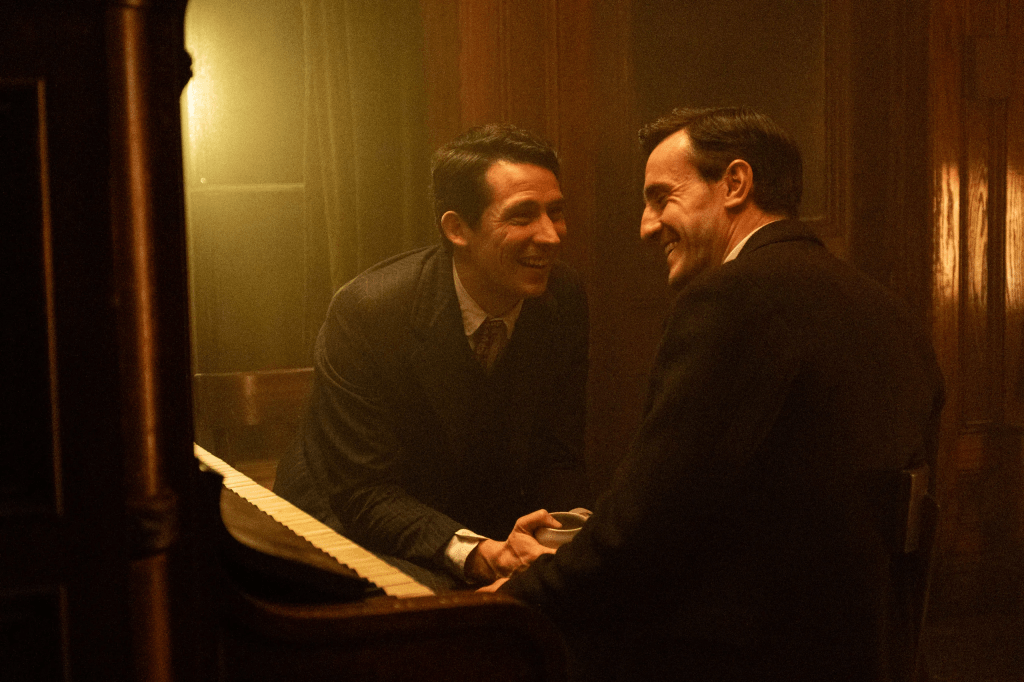
Oliver Hermanus’s The History of Sound listens its way into romance: two men bound by music after World War I find tenderness and longing in the act of recording folk songs, capturing fleeting voices as a way to document a world already vanishing. Paul Mescal and Josh O’Connor give the film its aching core, their chemistry shaped as much by quiet observation as by desire, the intimacy between them deepening with each shared melody and roadside confession. The film is patient and elegiac—love is not always loud, Hermanus seems to say; sometimes it is the quiet labor of listening to one another that keeps a relationship alive, even when circumstance conspires against it. Their journey becomes a gentle, mournful meditation on intimacy, art, and the fragile beauty of connection formed in the wake of loss.
Bone Lake (2025)
Director: Mercedes Bryce Morgan
Writer: Joshua Friedlander
Starring: Maddie Hasson, Alex Roe, Marco Pigossi & Andra Nechita
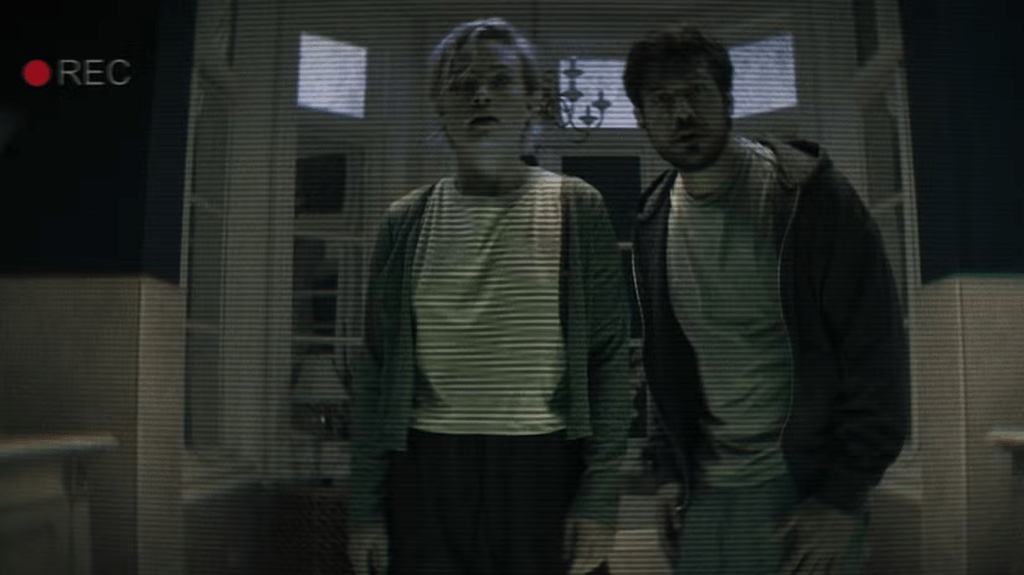
Bone Lake sets desire against isolation: a shoreline getaway that moves from sun-slick flirtation to corrosive mind games when a mysterious couple appears and begins subtly destabilizing every assumption our protagonists have about trust. Mercedes Bryce Morgan builds the film as an erotic thriller where the performance of attraction is weaponized—flirting becomes negotiation, boundaries dissolve into bargaining, and each glance feels like a wager you didn’t agree to make. Maddie Hasson sells the film’s central unease, navigating the thin line between intrigue and entrapment as the weekend spirals toward something nastier than jealousy. By the final unsettling frame, Bone Lake stands as a tidy study in how vacation intimacy can be both theater and trap, a place where sincerity becomes its own liability.
Keeper (2025)
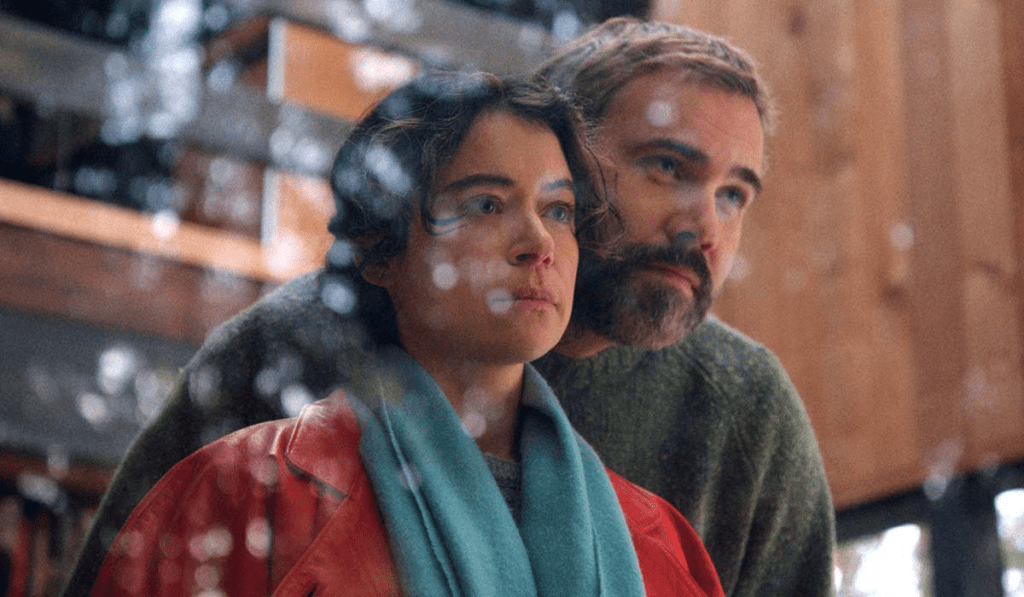
Director: Osgood Perkins
Writer: Nick Lepard
Starring: Tatiana Maslany & Rossif Sutherland
In Keeper, director Osgood Perkins turns romantic tension into something quietly monstrous. What begins as a weekend getaway for a couple celebrating a one-year anniversary slowly curdles into a hall of domestic mirrors — visions, unsettling gifts, and strange intimations about lineage and appetite. Maslany’s Liz remains the film’s incandescent center, while Sutherland’s Malcolm becomes the brittle axis around which suspicion spins, his charm growing as fragile as the relationship itself. Perkins uses folk-horror textures to make ordinary tenderness feel precarious, letting desire and dread bleed into each other until you can’t tell which feels safer. Intimacy here is both the promise and the threat — a reminder of how even the closest relationships can harbor shadows we pretend not to see.
Hamnet (2025)
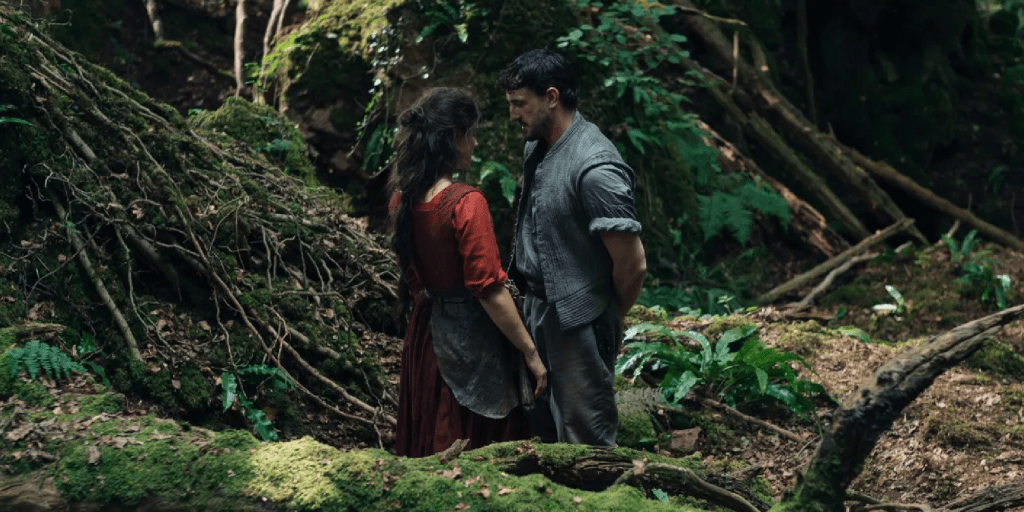
Director: Chloé Zhao
Writer(s): Chloé Zhao & Maggie O’Farrell
Starring: Jessie Buckley & Paul Mescal
Even before stepping into the theater, Hamnet announces itself as a layered, emotionally dense adaptation — but Chloé Zhao renders it surprisingly intimate. Though the story lives in Shakespeare’s orbit, Zhao refuses to engage with the icon or the myth; instead, she turns toward the private world of William (Paul Mescal), his wife Agnes (Jessie Buckley), and their three children, including the young Hamnet whose loss quietly reshapes everything we know about the family. Another list could easily claim this film — one centered on parenthood — but here the focus rests on the fragile, deeply human bond between William and Agnes. Their marriage is loving yet pulled taut by ambition, distance, and a grief that settles into the walls around them. Zhao threads personal sorrow with the first sparks of artistic creation: What does partnership look like when tragedy interrupts it? How does shared loss become both a fracture and a form of communion? The film lives in these soft, aching spaces, finding its power in what is said and unsaid.
Eternity (2025)
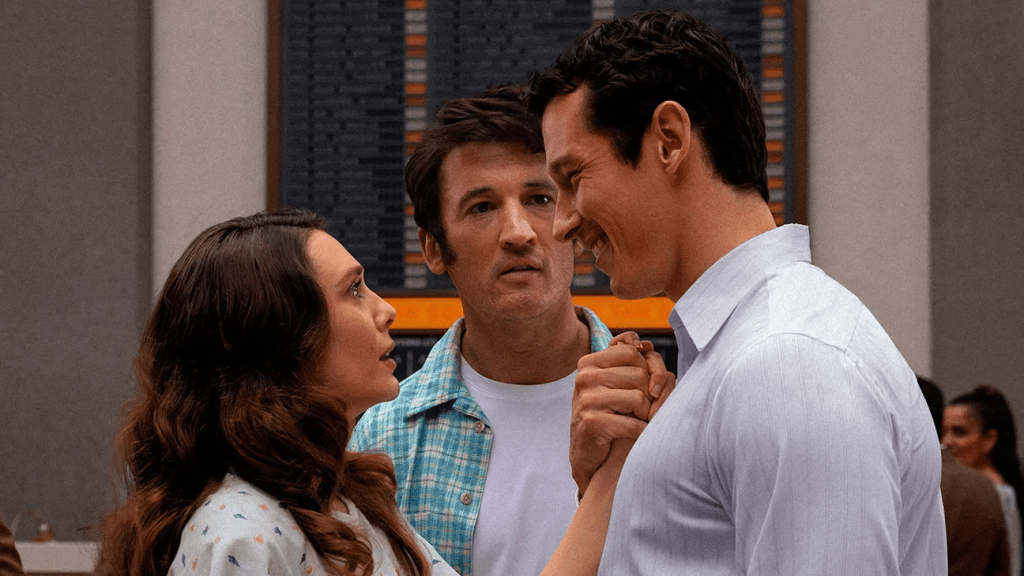
Director: David Freyne
Writer(s): David Freyne & Pat Cunnane
Starring: Elizabeth Olsen, Miles Teller, Callum Turner & Da’Vine Joy Randolph
The romantic comedy some expected from Celine Song this year arrives, instead, in David Freyne’s Eternity — a vibrant, slightly surreal afterlife tale perched between whimsy and heartbreak. Set in a liminal space where souls prepare for the next phase of existence, the film follows Joan (Elizabeth Olsen) as she confronts an impossible choice: Should she spend eternity with her husband Larry (Miles Teller), the man she built a life with, or with Luke, her first love who died young? Freyne turns this metaphysical dilemma into a lively meditation on the relationships we nurture, the ones we leave unfinished, and the ones that shape us long after they end. Bright, funny, and quietly profound, Eternity wonders whether love in life determines love after life — and whether the heart can truly split itself in two.
In surveying these stories—messy, tender, chaotic, hopeful—it becomes clear that modern relationships aren’t collapsing under the weight of change; they’re evolving. These films show us partnerships stretched by ambition, shaped by grief, revived by chance, undone by desire, and reimagined through culture, technology, and shifting social norms. If anything, 2025 proves that intimacy is still cinema’s most reliable frontier: endlessly variable and perpetually revealing. Whether framed through comedy, horror, romance, or speculative fiction, each film asks its own version of the same timeless question: What does it mean to love someone—and what does it mean to be loved back? And in their answers, contradictory and incomplete as they often are, we find the contours of our own emotional lives reflected right back at us.
 818 Lens