Release Date: October 17, 2025 (USA)
Runtime: 114 minutes (1h 54m)
Rated: R — for strong violent content, gore, teen drug use, language
Production Companies: Blumhouse Productions and Crooked Highway
Producers: Jason Blum, Scott Derrickson, C. Robert Cargill
Editing: Louise Ford
Music / Composer: Atticus Derrickson
Black Phone 2 (2025)

Writer(s): Scott Derrickson & C. Robert Cargill (based on characters created by Joe Hill)
Starring: Ethan Hawke, Mason Thames, Madeleine McGraw, Miguel Mora, Jeremy Davies, Demiàn Bichir, Maev Beaty, Graham Abbey, Arianna Rivas
Hollywood loves to romanticize originality—at least until it comes back to bite. The original Black Phone earned its praise by being something fresh in a crowded horror landscape. Ethan Hawke had already carved his way into the Blumhouse pipeline with Sinister, and in this film, he evolved into its masked nightmare as “The Grabber.” The sequel steps into that shadow with an attempt to build on what came before—this time with Mason Thames and Madeleine McGraw leveling up their performances as Finney and Gwen. The siblings now face their lingering trauma from the first film’s events, forced to confront a past they thought they had already buried. But does the sequel succeed in doing something more than repeating the first film’s formula?
This time, the story trades its suburban backdrop for the colder, more isolated setting of a religious camp: Alpine Lake Camp. The shift is immediate and deliberate. At the forefront once again are Finney and Gwen, joined by their friend Ernesto (Miguel Mora), who’s still grappling with the loss of his brother at the Grabber’s hands. We pick up four years after the original events and witness how deeply the past continues to bleed into their present. Soon, Gwen begins having unsettling dreams about a camp, their mother, and a presence that implies The Grabber may not be fully gone—at least not in her mind. It’s hard not to root for Finney and Gwen; their sibling chemistry remains a strong heartbeat of the film. Thames and McGraw slip back into their dynamic with ease, carrying emotional weight while grounding the story in something human and familiar.
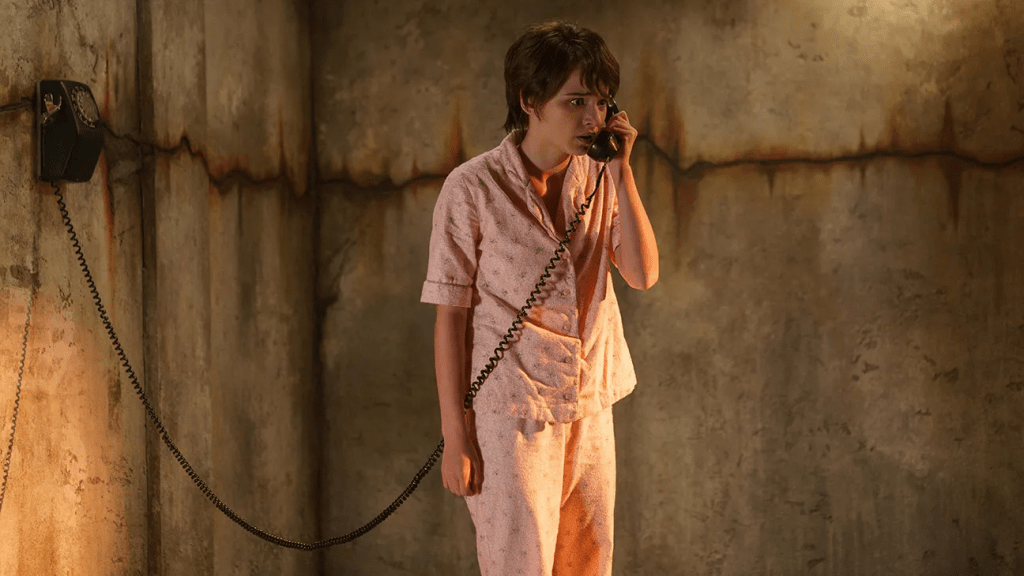
Because it’s set in the 1980s, the film quickly drops era-specific slang to anchor us in time—almost too eagerly at times—but it doesn’t distract from its core narrative. Gwen’s visions, reminiscent of her late mother’s abilities, return in unsettling bursts, and from that moment, the film begins weaving a thread of grief, trauma, and cyclical family legacies. While their father, who loomed darkly over the first film, is mostly sidelined this time, that absence makes room to explore their mother’s past and the spiritual tether that connects Gwen to something beyond.
Thematically, The Black Phone 2 mirrors much of its predecessor: loss, generational trauma, and the terror of unresolved wounds. But the scares, tension, and mythology evolve. The isolated camp becomes a pressure cooker, forcing the kids to rely on each other regardless of their fractured relationship to faith. The most obvious comparison is Nightmare on Elm Street—the “dream haunting” structure is clear—but the film’s supernatural “rules” can feel uneven, occasionally demanding a harder suspension of disbelief. Still, those dream sequences create striking moments: deceased kids reaching out from the beyond, an additional mission hidden within their whispers, and a sense of dread that feels familiar yet sharpened. The violence is more gruesome this time, amplified by the stark winter backdrop and Derrickson’s direction.
The mountain setting pays off visually. Snowstorms, frozen lakes, and the glow of red heater lights inside wooden cabins make for atmospheric, almost painterly horror shots. It’s a backdrop underused in the genre, and here, it lends the film both beauty and unease. Ethan Hawke’s return as The Grabber takes more of a backseat narratively—his screen time is limited—but his presence looms heavier than before, made more frightening by his absence. His physicality may be reduced, but his psychological grip is stronger.
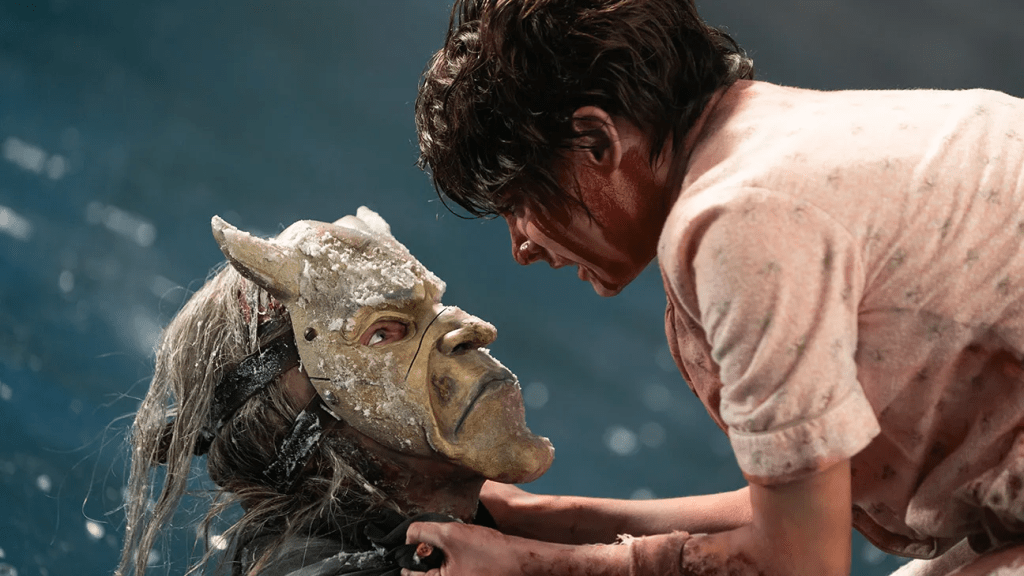
Narratively, the film isn’t reinventing anything. It follows well-tread horror territory—grief, trauma, supernatural vengeance—but its specific blend of setting, antagonist, and eerie dream sequences carves out its own identity. The dream imagery, grainy and Super 8-like, is particularly effective, lending an authentic uneasiness to Gwen’s visions. Unlike many recent horror films, Black Phone 2 doesn’t dive deep into its themes; it keeps grief and trauma humming as an atmospheric undercurrent rather than dissecting them outright.
It’s slower than the original, intentionally so, and that pacing builds a colder, eerier tone. It may not be groundbreaking, but horror fans will likely appreciate its well-staged violence, dreamscapes, and ensemble of scrappy teen fighters. The Black Phone 2 doesn’t try to be louder than its predecessor—it tries to haunt differently. And in that choice, it manages to hold its own.
 818 Lens