
Release Date: September 26, 2025 (U.S. wide theatrical / IMAX)
International release begins September 24, 2025
Runtime: 162 minutes (2 hr 42 min)
Rated: R — for pervasive language, violence, sexual content, and drug use
Production Companies: Ghoulardi Film Company in association with Warner Bros. Pictures
Producers: Paul Thomas Anderson, Adam Somner, Sara Murphy (executive: Will Weiske)
Cinematography: Michael Bauman
Editing: Andy Jurgensen
Music / Composer: Jonny Greenwood
One Battle After Another (2025)
Director & Screenwriter: Paul Thomas Anderson
Starring: Leonardo DiCaprio, Sean Penn, Teyana Taylor, Chase Infiniti, Benicio del Toro, Regina Hall
It’s difficult to know where to even begin when discussing One Battle After Another, because it truly stands as one of the year’s most ambitious and exhilarating spectacles. The scale of its entertainment is matched only by the urgency and timelessness of its themes. This is a film destined to resonate for years — perhaps generations — to come, and experiencing it in its moment of cultural relevance feels both monumental and inspiring. Paul Thomas Anderson has constructed not only a story about revolution and change, but also a layered meditation on the power structures that weigh upon revolutionaries, the cyclical nature of struggle, and the lessons and traits that are passed down from one generation to the next. And while that may sound lofty, the film also delivers in purely cinematic terms: cinematography, movement, performance, writing, and topicality all working in concert. Within minutes, One Battle After Another secures its place as a classic-in-the-making, destined to be one of the most hotly discussed films of the 2020s.
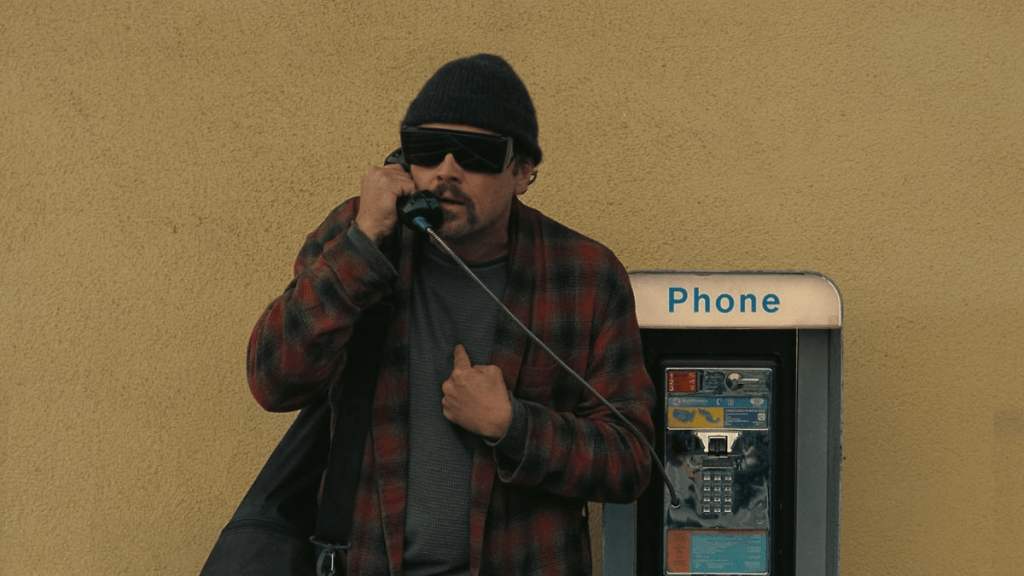
We first meet “Ghetto” Pat Calhoun (Leonardo DiCaprio) and Perfidia Beverly Hills (Teyana Taylor), revolutionaries who storm onto the screen with a fiery act of liberation: freeing detained immigrants in a sequence charged with ferocity and unrelenting conviction. They aren’t dabbling in rebellion — they embody it. From the very start, these two command the audience’s attention with a grip so firm it barely loosens throughout the film. Their antics, their emotions, and the ripple effects of their choices set the tone for everything that follows. Looming over their actions is commanding officer Steven Lockjaw (Sean Penn), whose presence becomes omnipresent. His entanglement with Perfidia and his pursuit of Pat create a fraught triangle of obsession, ideology, and desire that lingers throughout the film’s expansive timeline.
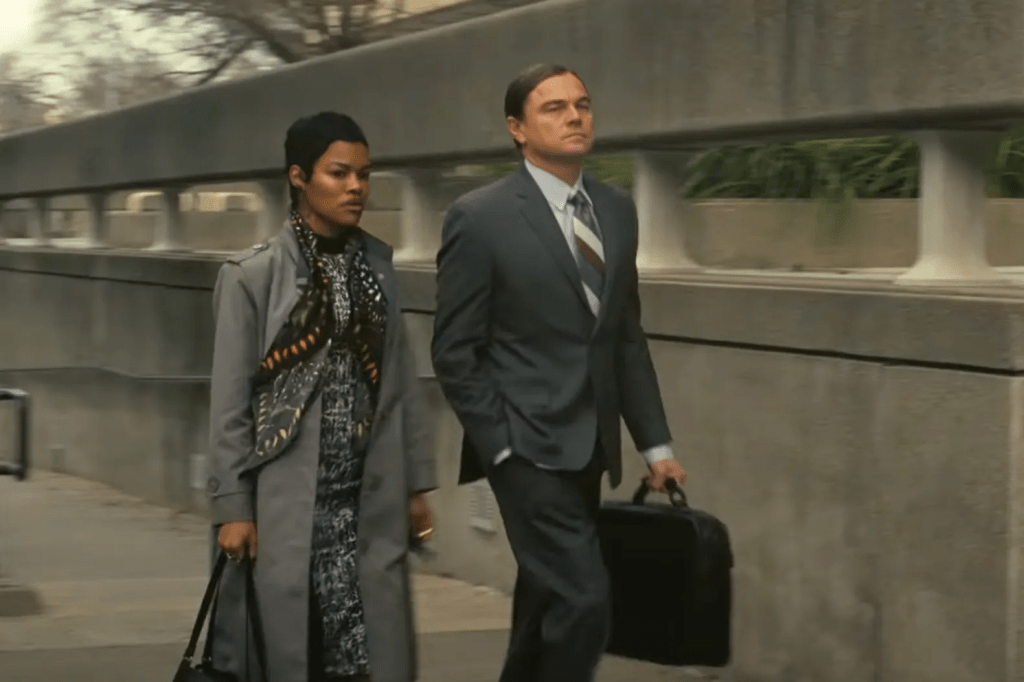
With this foundation, Anderson establishes the pulse of the movie. Tension is relentless. Characters are always in motion. The camera, too, refuses to rest, propelling the viewer through scenes of escalating stakes. The film’s past sequences, set amid revolutionary upheaval, are imbued with a timeless resonance. They stand as a mirror, contrasting sharply with the present-day social and political climate, which is rendered in tones both satirical and sobering. Central to this dual structure is Pat — or, as we come to know him later, Bob — who now lives under an alias alongside his daughter Willa (Chase Infiniti).
Calling the film flawless might be an overstatement, but its charms lie in its optimism. Anderson manages to craft a narrative that believes in the possibility of change, while also satirizing political realities with a tone that is both concerned and strangely hopeful. Yes, Bob benefits from a handful of conveniently timed escapes, but these feel rooted in the credibility of his past. The strategies, networks, and contingency plans he forged during his days with the French 75 return to aid him in moments of crisis. It doesn’t feel implausible so much as it feels like a testament to the long tail of resistance. And while Bob draws strength from a history of camaraderie and sacrifice, Willa is carving her own path — embodying, often physically, the revolutionary zeal that once defined her parents. In this dynamic, Anderson explores generational differences and continuities: where the wisdom of one overlaps with the passion of the other, and how gaps in understanding are filled with knowledge passed down or reshaped.

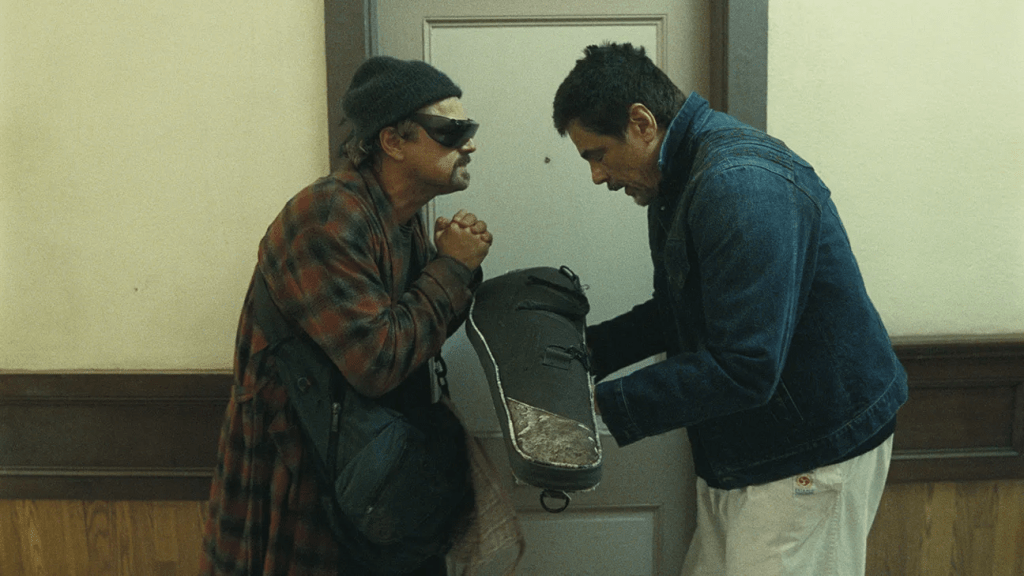
The acting across the board is exceptional. DiCaprio, always consistent, delivers a measured performance that allows others to shine. Sean Penn is unforgettable, playing Lockjaw as a villain of almost cartoonish exaggeration, yet with just enough nuance to ground his menace in reality. His character embodies not only authoritarian cruelty but also the persistence of ideology across time, a relic of the past haunting the present. Teyana Taylor, with less screen time, nonetheless leaves an indelible mark — her Perfidia radiates complexity, moral ambiguity, and intrigue. Benicio Del Toro inhabits his role with effortless cool, his calm exterior concealing an authority that commands every scene. Chase Infiniti is nothing short of a revelation. Holding her own alongside seasoned stars, she emerges as a breakout talent whose presence suggests a career poised to soar. Regina Hall, though underutilized, maximizes her moments — her performance at a crucial turning point alters the entire trajectory of the film, exuding a subtle authority that rivals even Del Toro’s enigmatic Sensei.
There are moments, however, that feel ripe for deeper exploration. For a nearly three-hour epic, it might have been worthwhile to dive further into Perfidia’s history and motivations, or to flesh out Lockjaw’s origins and the path that led him to military command. Yet the film’s length leaves little room for indulgence, and to cut anything else would risk weakening its aesthetic and thematic power. Perhaps Anderson’s choice to leave certain characters cloaked in ambiguity serves a purpose: keeping us at a distance from their inner lives while drawing us deeper into the generational consequences of their actions. The narrative provides us with just enough of the past to contextualize the present, but it is in the contemporary setting — today’s volatile sociopolitical climate — that Anderson lingers longest, scrutinizing how old battles evolve into new ones.
Ultimately, One Battle After Another belongs to a lineage of recent films that grapple directly with the turbulence of our present moment. This year alone has given us no shortage of politically attuned works, and many of them adopt a decidedly pessimistic tone about the future. What distinguishes Anderson’s film is its refusal to succumb to cynicism. Yes, it acknowledges ongoing struggle, systemic challenges, and the relentless churn of “one battle after another.” But it also places faith in the generations to come. Where other films predict doom, Anderson envisions resilience. Drawing from his own life as a father, he crafts a story that insists upon the possibility of renewal — of hope persisting even under siege. The film resonates not because it denies hardship, but because it reminds us that legacies are carried forward, battles are inherited, and victories, however fleeting, can ripple across generations.
 818 Lens