Release Date: U.S. limited theatrical release on August 22, 2025, expanding wide on September 5, 2025
Runtime: 82 minutes (1h 22min)
Rated: R for language, sexual content, and nudity
Production Companies: Neon, Topic Studios, Watch This Ready, TeaTime Pictures
Producers: Emily Korteweg, Michael Angelo Covino, Kyle Marvin, Ryan Heller, Dakota Johnson, Ro Donnelly, Samantha Racanelli
Cinematography: Adam Newport-Berra
Editing: Sara Shaw
Music / Composer: David Wingo and Dabney Morris
Splitsville (2025)
Director: Michael Angelo Covino
Writer(s): Michael Angelo Covino and Kyle Marvin
Starring: Kyle Marvin, Michael Angelo Covino, Dakota Jonhson, Adria Arjona, Nicholas Braun, Davida Castañeda, O-T Fagbenle, Charlie Gillespie, Simon Webster
It’s been a long while since we’ve had a romantic screwball comedy that leans so heavily into physicality—not just as a vehicle for laughs, but also as a language of vulnerability, awkwardness, and, surprisingly, tenderness. Michael Angelo Covino’s Splitsville revives the screwball energy of classic comedies while infusing it with a distinctly modern take on relationships, where open marriages, divorces, and best-friend loyalties collide in a brightly lit world that masks a storm of insecurities. What Covino achieves is a kind of precision chaos, a world filled with gags that feel both outlandish and brutally true to the ways people hurt each other.
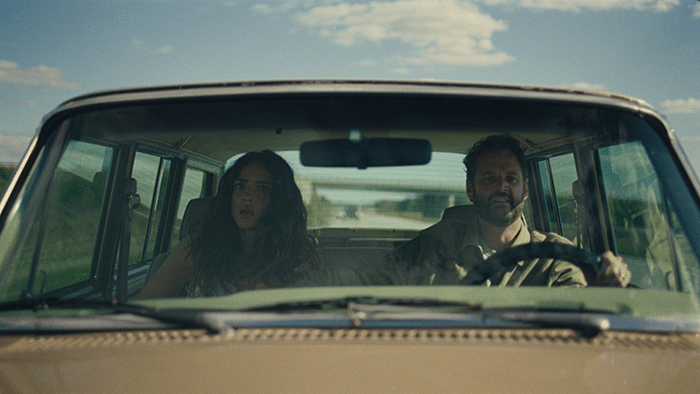
From the very first scene, we’re thrown into instability: Carey (Kyle Marvin) and Ashley (Adria Arjona) are en route to visit their friends, Paul (Michael Angelo Covino) and Julie (Dakota Johnson), when Ashley blurts out her desire for a divorce. Carey, blindsided, panics and bolts—seeking refuge with Paul, who casually reveals that he and Julie are in an open relationship. This discovery isn’t just comic fodder but a thematic trigger, giving Carey permission to imagine a path forward where the humiliation of divorce can be reframed as liberation. But Covino, both in direction and performance, is sharp enough to make sure every attempt at “progressive coolness” feels brittle, performative, and doomed to backfire.
The setup becomes a playground for exploring the minefield of modern relationships. The film pokes at the contradictions of non-monogamy—how people sell it to themselves as freedom, but how easily old habits of jealousy, insecurity, and neediness creep in. Carey, Paul, Julie, and Ashley are drawn together in a revolving carousel of shifting affections, and yet the film never loses its sense of warmth. Despite the betrayals and absurd antics, there’s something cozy about the ensemble, as if we’ve been invited into their living room to witness their most disastrous impulses.
One of the standout moments, though, is the film’s centerpiece—a sprawling, six-minute fight sequence that’s as choreographed as a musical number and as destructive as a Looney Tunes sketch. This chaotic moment is as emotionally devastating as it is hilarious, and it encapsulates the film’s tone perfectly. For me, the sequence felt like catharsis for Paul (and even Carey) after all the emotional strain they’ve been carrying. The tension between them is palpable, and it’s clear that they both are dealing with their own stresses—Carey being more upfront about it, while Paul tries to bottle it up. It’s a great midway sequence that gives the film both a comedic and emotional release, letting you breathe for a moment before diving back into the mess.
Much has been made about whether Arjona and Johnson’s talents are underutilized, especially compared to Covino and Marvin’s male leads. But the design here seems intentional—our perspective is tethered to Carey, the one flailing hardest, and it’s through Julie that he seeks answers he can’t wrestle out of Ashley. Johnson plays Julie with a careful balance of groundedness and curiosity, becoming the film’s moral hinge, while Arjona’s Ashley embodies the messy clarity of someone who’s already figured out what she wants, even if it means detonating her marriage.
The comedy thrives on timing—on Carey’s desperation colliding with Paul’s cocky obliviousness, and on how fragile everyone’s attempts at being “evolved” really are. And then comes the set piece, the movie’s centerpiece: the fight that demolishes not just the furniture but also the fragile dynamics between friends. It’s a climax of physical comedy and emotional implosion rolled into one—a moment where slapstick and sincerity crash headlong into each other.
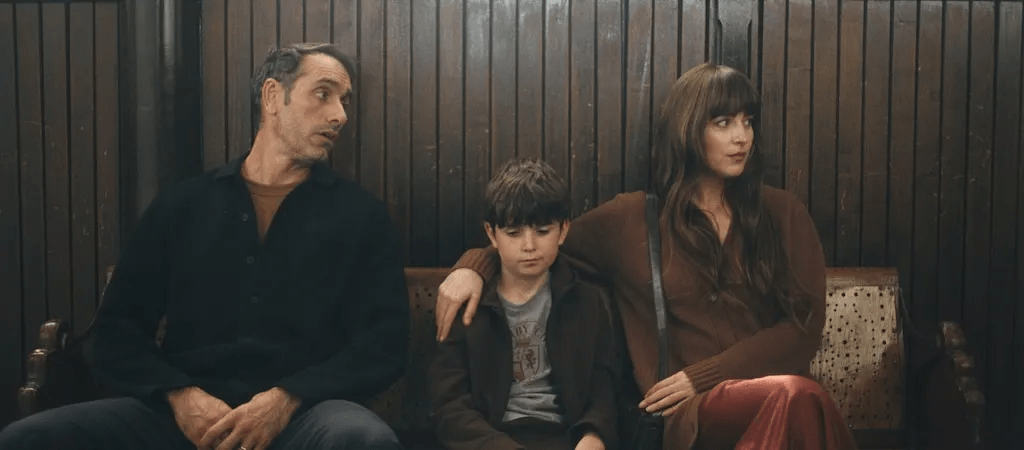
I think the film walks a fine line with its portrayal of open relationships. I don’t think it’s trying to critique non-monogamy as much as it’s asking: What works for you? It’s represented in the diverse ways the characters approach their relationships, with no judgment from the script. Even the side characters seem to have their own personal relationships to the idea of openness. What it really gets at is the curiosity, the freedom to explore, and the messiness that can come with that search. There’s no clear answer in the end, but the journey leaves you thinking about what you want.
By the end, Splitsville leaves us with laughter, exhaustion, and just enough melancholy to remind us that behind the pratfalls are real wounds. It’s raw, real, and genuine—a comedy about how the lines between love, friendship, and rivalry blur in ways that no amount of “cool” can smooth over. For me, the ending felt satisfying in a bittersweet way. It’s a bit definitive in what the characters decide, yet it leaves enough room for interpretation about where they’ll go next. Given everything we’ve seen, it feels like anything could happen, which I think is fitting for a movie so open to the possibility of change.
The performances across the board are sharp, layering humor with pathos. Marvin makes Carey’s desperation both funny and heartbreaking, while Covino doubles as director and performer, embodying Paul as both swaggering and pathetically insecure. Johnson and Arjona elevate what could have been side-note roles into textured counterpoints. Even the supporting cast (including a scene-stealing Nicholas Braun) folds seamlessly into the chaos, adding new wrinkles to an already volatile story.
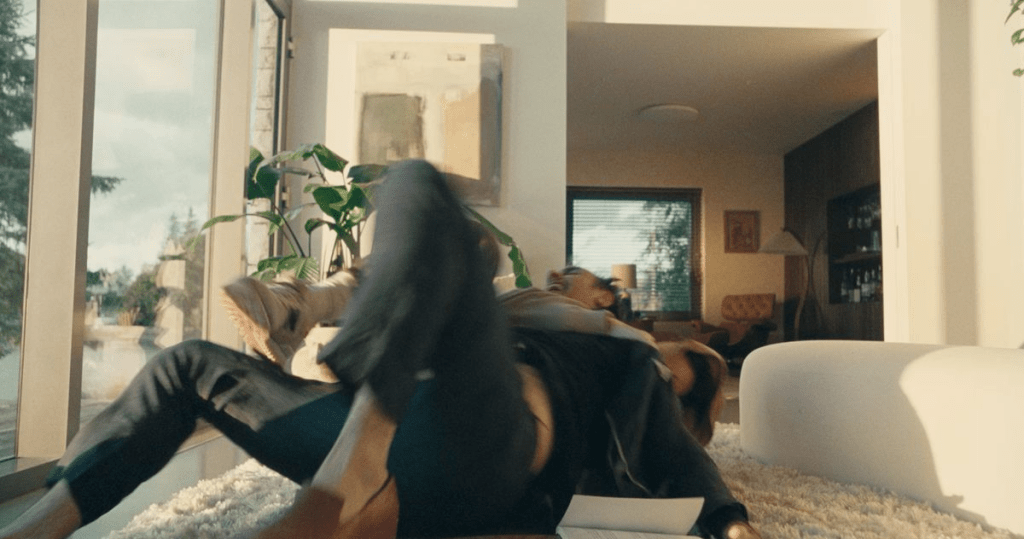
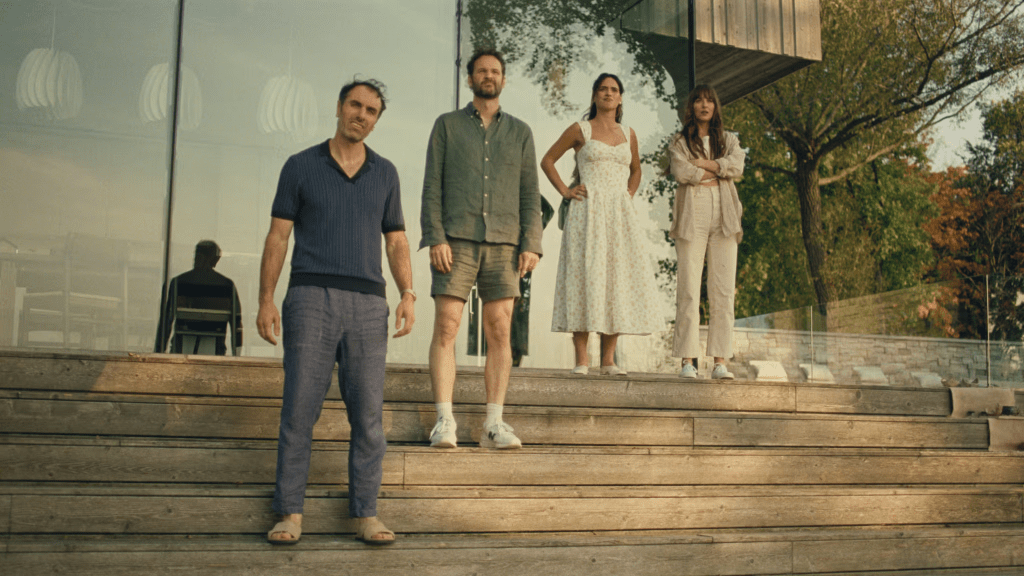
The film’s home setting also plays an essential role in enhancing its intimacy. Paul’s sleek house, with its cozy yet chaotic atmosphere, makes you feel like a fly on the wall, observing these tensions and friendships unraveling. It pulls you into the chaos, allowing you to empathize with the characters and feel as if you’re a part of their world. In that way, the setting adds to both the intimacy and the chaotic undercurrent that runs throughout the film.
In the end, Splitsville nails its screwball tone—offering laughs, a few cringes, and an emotional punch. It’s a quirky, bittersweet dive into the complexity of modern relationships, and despite all the chaos, it leaves you with a sense of understanding about how fragile and complex human connections can be.
 818 Lens