
Release Date: August 8, 2025 (United States — limited theatrical release)
Runtime: 94 minutes (1 h 34 m)
Rated: R — disturbing violent content; language; grisly violent content
Production Companies: Adorable Damage, Pathogen Pictures
Producers: Bruce Guido, Stuart Ortiz, Alex Yesilcimen
Cinematography: Seth Fulleer
Editing: Stuart Ortiz
Music / Composer: Sarah DeCourcy
Strange Harvest (2025)
Director & Screenwriter: Stuart Ortiz
Starring: Peter Zizzo, Terri Apple, Andy Lauer, Matthew Peschio
While nothing groundbreaking is produced per se, Stuart Ortiz still manages to craft a unique killer with grotesque, intense kills and a production value higher than the style he’s emulating: a mockumentary. The acting fits the spoof to a tee, and our leads—Detective Joe Kirby (Peter Zizzo) and Detective Alexis Taylor (Terri Apple)—deliver convincing performances that channel those gritty, relentless TV cops. You want to cheer them on, and you do, yet their occasional blunders and missteps make you second-guess them. These two have mistakes scattered aplenty, but there’s a charm and empathy to them that keeps you rooting for them anyway. Is this a commentary on our real-world justice system? Or a satire of serial killer documentaries and the often underwhelming portrayal of law enforcement? Either way, Ortiz captures gorgeous scenery and imagery, contrasted by terrifying, disturbing content.
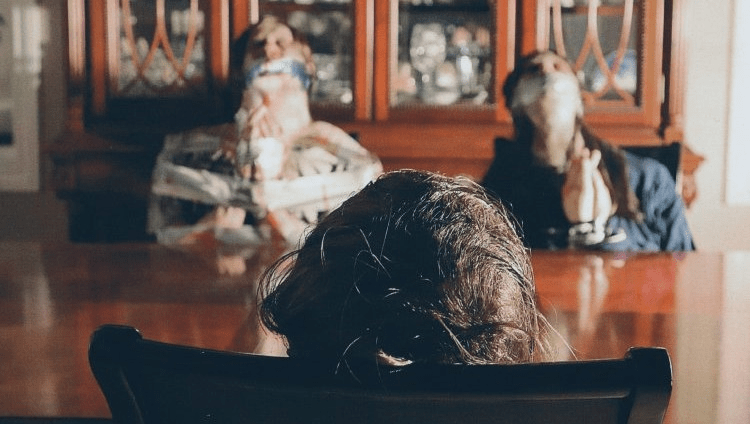
Watching Strange Harvest in a theater was an experience in itself—the room felt heavy, hushed, and almost transfixed by what was happening onscreen. There was a palpable sense that everyone was locked in. I even saw one person quietly leave midway through, and I can only theorize it was due to the film’s graphic nature. This isn’t the kind of mockumentary that politely cuts away from the more harrowing details. It lingers—sometimes uncomfortably long—on crime scenes in a way most documentaries wouldn’t dare, deliberately refusing the softening touch of discretion. The effect is jarring, unsettling, and for some, maybe too much. For me, though, it worked. I can compartmentalize between the reality of such crimes and the fictional nature of a film production, so I was able to suspend disbelief while still being grounded in the unease Ortiz wanted me to feel. Even so, there were moments that dug under my skin—and I suspect most of the audience felt that too.

Mr. Shiny is back—and more gruesome than ever. The once-vanished serial killer resurfaces in San Bernardino, leaving our detectives to follow his elusive trail once again as he drops notes and bodies like breadcrumbs for what’s to come. What unfolds is a high-production mockumentary examining both the nature of these cases and their saturation in modern media. The pacing nails the true-crime rhythm—neither rushed nor dragging—moving between detective interviews, witness accounts, and grisly visual evidence with a steady hand. Ortiz knows how to juxtapose methodical police procedure with shocking imagery, letting each element feed into the other.
One key way Ortiz differentiates his film from standard true-crime fare is by showing us everything those documentaries wouldn’t. He cuts directly to uncensored, grisly scenes of the bodies, offering no safe buffer between us and the aftermath of Mr. Shiny’s work. The discomfort doesn’t necessarily come from the gore itself—many audiences are desensitized to that—but from the sudden, unflinching confrontation. On a massive theater screen, it feels almost snuff-like, and that’s part of the point: it forces viewers to consider how often true-crime media sanitizes reality for our comfort. The crime scenes themselves are works of visual contrast—gory and disturbing in content but beautifully composed in execution. The sequence that stood out most to me was the finale, with its eerie blend of precision staging and grotesque detail, though each individual crime scene was its own disturbing set piece.
The score and sound design further reinforce the documentary illusion. From emulated archival footage to distorted webcam feeds, the audio feels appropriately authentic. It’s never overdone—Ortiz uses sound to maintain realism rather than draw attention to itself. The result is an atmosphere that feels lived-in, making the disturbing moments even harder to shake.
In tone and structure, Strange Harvest recalls The Poughkeepsie Tapes—gritty, unsettling, and willing to blur the line between fiction and plausible reality. For me, that’s high praise. While I suspect it takes some inspiration from that earlier cult favorite, Ortiz arguably refines the approach, employing nearly every element with more precision and thematic purpose.
At its core, the film is a satirization of true-crime culture and the commodification of tragedy. It’s a horror film, certainly—though not one that relies on jump scares. Its horror is quieter, more insidious, stemming from realism and the uncomfortable recognition of our own viewing habits. Ortiz intentionally disrupts the “safe” consumption patterns of the genre, inserting jolting imagery to challenge the audience’s complicity.
Kirby and Taylor’s characters endure because of their passion for the job. They’re written as detectives who know exactly what they’ve signed up for—the trials, the horrors, and the inevitable toll. Even if Ortiz is gently mocking the archetype of the relentless investigator, he never undermines their sincerity or drive. In fact, part of the satire lands precisely because we believe they care. The critique seems aimed less at individual detectives and more at the systems they operate within—the procedural and social frameworks that can both aid and hinder justice.
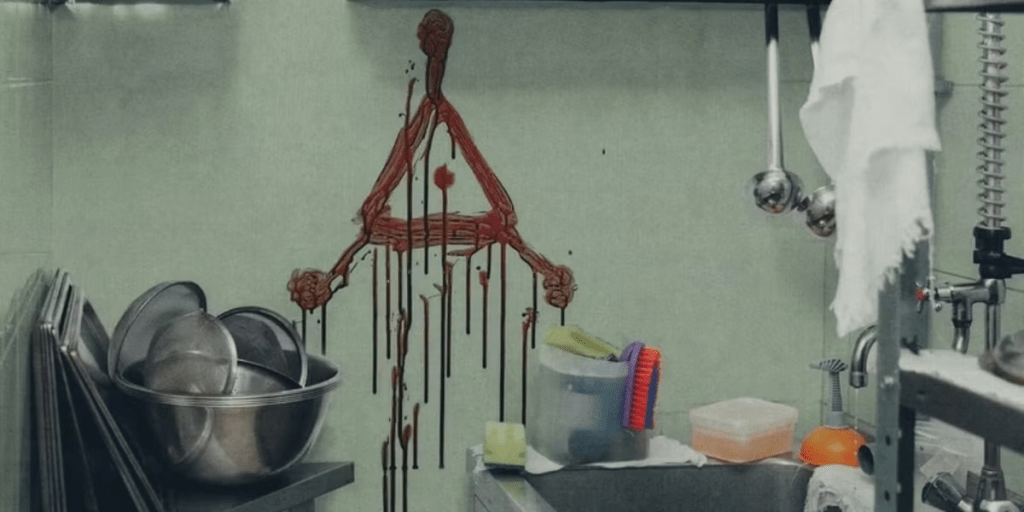
One notable facet—emphasized by the detectives—is the showmanship of the killer. Many of Mr. Shiny’s murders aren’t just acts of violence; they’re meticulously staged, sometimes at great personal risk, to create elaborate displays. His recurring symbol—often painted in blood—is left at each scene, sometimes in locations so impractical they require ladders, careful maneuvering, and precise execution. These ritualistic flourishes are unnerving in part because of the transparency with which we see them.
By the end, Strange Harvest flirts with mythological and supernatural overtones, though the detectives reject them outright, insisting on a human explanation for everything. The climax itself is both satisfying and intentionally vague, leaving unanswered questions that dangle like bait for a sequel.
Ultimately, Strange Harvest is a sharp, unsettling mockumentary that marries top-tier practical effects with thoughtful satire. The murders are some of the most creative in recent memory—equal parts fascinating and deeply troubling in how they play into society’s appetite for true crime. Ortiz uses the familiar beats of the genre not to comfort us, but to strip away its protective layers. What’s left is raw, uncomfortable, and impossible to fully look away from.mong them: while the detectives may have stopped Mr. Shiny, they—and we—are left without closure on his deeper intentions.
 818 Lens