Release Date: July 18, 2025 (U.S.)
Runtime: 2 h 28 m (148 min)
Rating: R
Production Companies: A24, IPR.VC, 828 Productions, Square Peg
Producers: Ari Aster, Lars Knudsen (+ exec. producers Alejandro De Leon, Robert Dean, Harrison Huffman, Todd Lundbohm, Andrea Scarso)
Cinematography: Darius Khondji
Music / Composers: Bobby Krlic (aka The Haxan Cloak) and Daniel Pemberton
Eddington (2025)

Director & Screenwriter: Ari Aster
Starring: Joaquin Phoenix, Pedro Pascal, Emma Stone, Austin Butler, Luke Grimes, Deirdre O’Connell, Micheal Ward, Clifton Collins Jr., William Belleau
The COVID‑19 pandemic has been mined for comedy, trauma, and commentary across film and TV. Yet few have tackled it with the audacity—or surreal precision—of Ari Aster’s Eddington. Much like the fractured year it depicts, the film itself feels split in two: a darkly comic neo‑Western that holds up a mirror to a time many would rather forget, yet can’t stop dissecting.
Aster takes us back to the summer of 2020, when masks, misinformation, racial reckoning, and political polarization collided in ways that permanently reshaped public life. He doesn’t shy away from that chaos—instead, he immerses us in it. It’s a film bound to divide audiences as sharply as the events it portrays. Some will find it cathartic, others will cringe or reject its provocations altogether. But it’s impossible to deny the discomfort feels intentional.
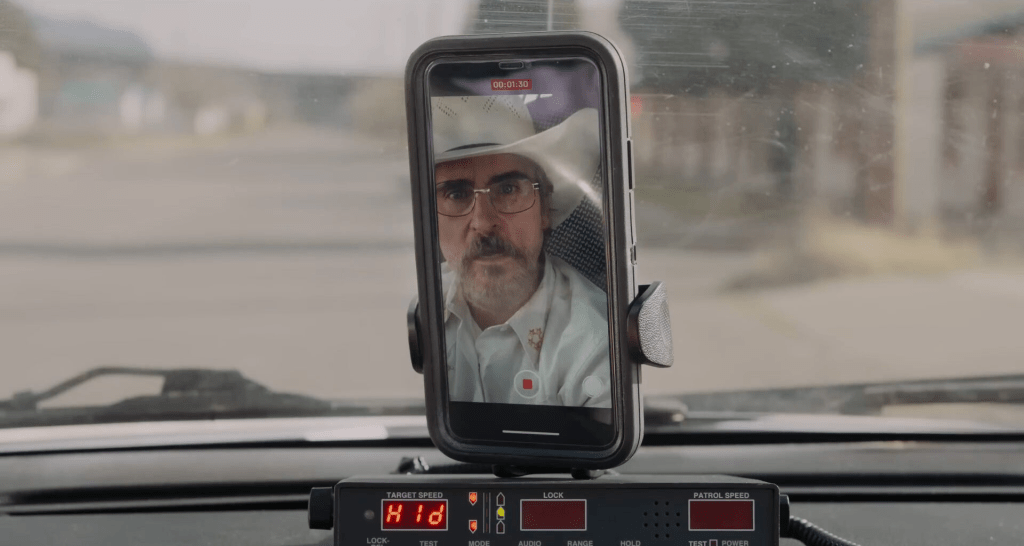
Joaquin Phoenix anchors the story as Joe Cross, a small-town sheriff with asthma and a steadfast opposition to mask mandates. As COVID grips the fictional New Mexico town of Eddington, Joe announces his run for mayor, challenging the incumbent Ted Garcia (Pedro Pascal). What begins as a political rivalry soon becomes a microcosm of America’s culture wars—exposing the fear, frustration, and absurdity simmering beneath the surface of 2020.
Phoenix carries the film like a weary guide, pulling us back into a reality that feels both recent and eerily distant. His performance, equal parts magnetic and unsettling, constantly forces us to question: Do we even like this man? Should we? It’s classic Aster territory—characters who are deeply flawed, morally ambiguous, and impossible to pin down.
Pascal’s Garcia is the slick counterpoint, while Emma Stone plays Louise Cross, Joe’s wife with a complicated past linked to Garcia. The supporting ensemble—Deirdre O’Connell as a conspiracy-obsessed mother-in-law, Austin Butler as a rising cult leader, Luke Grimes and Micheal Ward as Joe’s deputies—round out a town brimming with contradictions.
At its core, Eddington is a satire, but one that rarely lets you feel comfortable. Aster weaponizes dark comedy to highlight the ridiculousness of pandemic-era extremism while keeping the underlying pain intact. Conspiracies, racial tension, political ideologies, and social unrest all collide in this exaggerated yet oddly accurate portrait of 2020.
The George Floyd protests and the collective trauma that followed loom heavily over the film—not trivialized, but reframed through a heightened, surreal lens. Aster doesn’t pick sides. Instead, he dramatizes the entire spectrum of responses, letting audiences wrestle with their own biases. It asks the question: Were those times really hyperbolic, or were they simply… real?
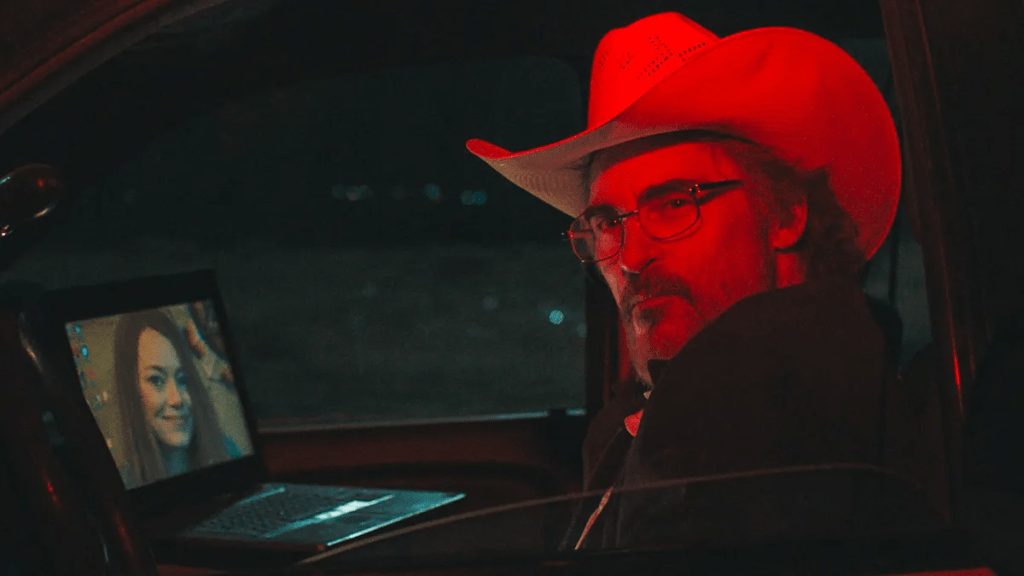
The film also explores how screens became our lifelines during lockdown. Phones, live streams, and viral clips are omnipresent in the narrative—not just as props but as tools of power, weapons of manipulation, and occasionally, symbols of connection. It’s a dystopian touch that feels all too familiar.
Like much of Aster’s work, Eddington thrives on tension and unease. It’s messy, sprawling, and intentionally overwhelming—cramming the anxiety of an entire year into two and a half suffocating hours. You’ll laugh nervously, cringe often, and maybe even want to look away. That’s the point.
This isn’t a film for everyone. Many will reject its uncomfortable truths and abrasive tone. Others will embrace its willingness to stare into the chaos of recent history. Either way, it’s impossible to leave without feeling something—disgust, nostalgia, frustration, maybe even relief.
The cinematography softens some of the blow. The New Mexico desert provides stunning, isolating visuals that contrast with the suffocating social climate. The score by Bobby Krlic and Daniel Pemberton further amplifies the dissonance: eerie, beautiful, and relentless.
Ultimately, Eddington is about us—the people who lived through 2020 and are still processing its aftermath. It’s a cultural autopsy, an uneasy time capsule, and a deeply human reflection on how fragile—and absurd—society can become under pressure.
Joaquin Phoenix delivers a complex, slippery performance that grounds the film even when it veers into satirical extremes. The ensemble gives us an eclectic snapshot of pandemic America, from conspiracy theorists to disillusioned youth. And Aster’s direction dares to ask: Can we ever look back at that time without flinching?
It’s a long, exhausting, fascinating, and divisive film—exactly like the year it captures. Whether you hate it or embrace it, you’ll walk away thinking about it. And maybe that’s the only way to process a time that still feels too close for comfort.
I’ll likely revisit Eddington for a deeper dive—it’s layered with so much substance it’s impossible to unpack in one sitting. For now, it’s clear Aster intended to make us feel suffocated by the same wave of paranoia and overstimulation we once endured. Whether that’s cathartic or unbearable is entirely up to you.
 818 Lens