Release Date: Premiere June 10, 2025; US wide release June 20, 2025
Runtime: 98 min (1h 38m)
Rating: PG for thematic elements, some action/peril
Production Companies: Pixar Animation Studios, Walt Disney Pictures
Producers: Mary Alice Drumm, Pete Docter, Lindsey Collins
Cinematography: Derek Williams and Jordan Rempel
Music: Rob Simonsen
Elio (2025)
Directors: Domee Shi & Madeline Sharafian, Adrian Molina (credited though he exited prior to completion)
Writers: Screenplay by Julia Cho, Mark Hammer, Mike Jones
Story by Adrian Molina, Madeline Sharafian, Domee Shi, and Julia Cho
Starring: Yonas Kibreab, Zoe Saldaña, Remy Edgerly, Brad Garrett, Jameela Jamil, Shirley Henderson, Matthias Schweighöfer
Originally helmed by Coco co-director Adrian Molina, Elio was set to be Pixar’s next great emotional journey—one that centered on identity, imagination, and growing up in a world that doesn’t always understand you. But what began as a vibrant, empathetic coming-of-age tale ended up watered down, reshaped by corporate mandates, and ultimately written off as one of Pixar’s biggest box office failures.
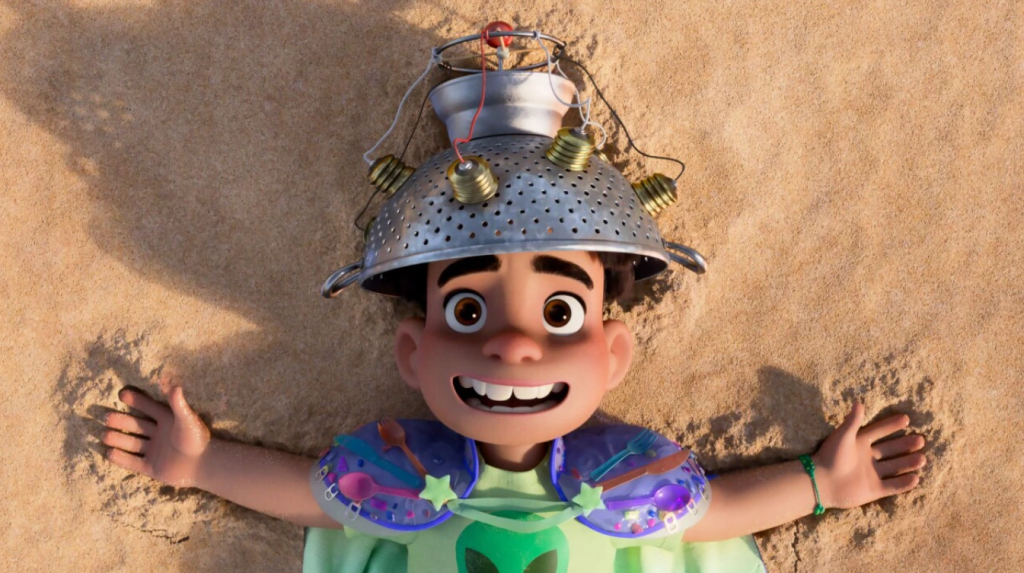
At its core, Elio follows a familiar Pixar pattern: a child navigating a fantastical world as a metaphor for real emotional struggles. In this case, it’s 11-year-old Elio, an introverted boy suddenly thrust into a galactic role as Earth’s accidental ambassador. But underneath the aliens and cosmic councils lies a deeper exploration of loneliness, otherness, and the evolving dynamic between parents and children—especially the ways parents’ expectations, absences, or misunderstandings leave lasting marks, wanted or not.
We’re introduced to young Elio Solís (voiced by Yonas Kibreab) at a space museum, where he’s pulled toward a Voyager spacecraft in a mesmerizing opening sequence. It’s not just his love for outer space that’s ignited—there’s a clear sense of longing. For connection. For somewhere to belong. For something bigger.
Years pass, and Elio’s fascination with space only intensifies. His aunt Olga (Zoe Saldaña), a stern but well-meaning Air Force major, grows increasingly concerned with his growing obsession and his more introverted, imaginative tendencies. When Elio secretly sends a message through a top-secret government communications device—one that explicitly asks to be abducted—chaos ensues. The resulting fallout nearly costs Olga her job and pushes her to enroll Elio in a summer camp for a much-needed reset.
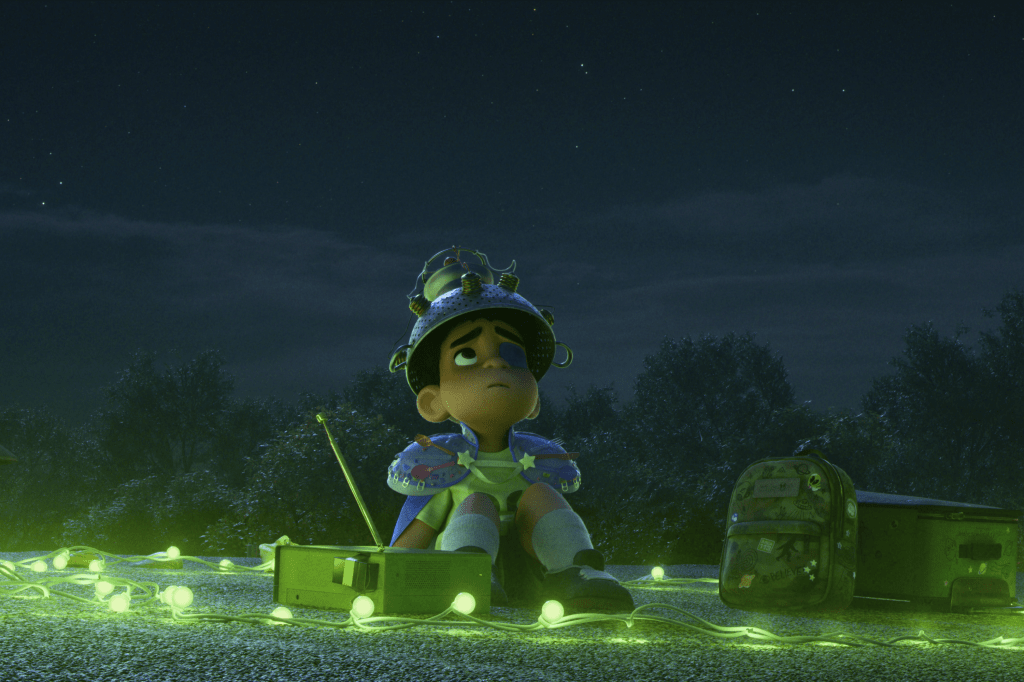
At camp, Elio runs into two boys he previously encountered on the beach—bullies who quickly reignite their torment. In a suspenseful Spielberg-esque chase sequence through the forest, Elio is cornered and about to be attacked… until time freezes. Quite literally. He’s abruptly and dramatically abducted by aliens in one of the film’s most thrilling transitions.
From there, the film takes a cosmic turn as Elio is brought to the “Communiverse”—a dazzling congress of alien life forms from across the galaxies, each representing their home worlds and traditions. Among them, he meets a colorful cast: Ooooo, Questa, Helix, and Naos. These characters serve as both comic relief and gentle guides as Elio struggles to convince the council that he is, in fact, Earth’s chosen ambassador. Spoiler: he’s not.
Complicating matters is the arrival of Lord Grigon (voiced by Brad Garrett), a menacing warlord seeking access to the Communiverse through brute force and intimidation. Elio attempts diplomacy, which momentarily wins him favor—but it’s clear that things are spiraling far beyond his control.
Back home, the clone resumes life with Olga. She’s thrilled by his sudden “normal” behavior—less anxious, more cooperative—but something doesn’t sit right. As their interactions unfold, subtle red flags emerge. He doesn’t speak in the quirky made-up language (“Elionese”) she once shared with the real Elio. His reactions seem slightly off. She brushes it off at first… until she can’t.
Meanwhile, the real Elio is imprisoned by Grigon after offending him in an argument about parenthood. In captivity, Elio befriends Glordon (Remy Edgerly), who we discover is Grigon’s own son. The two boys bond—not just through shared trauma, but through a rare and fleeting opportunity to simply be kids. For Elio, still grieving the loss of his parents, the universe has forced him to mature too quickly. For Glordon, childhood is barely even a concept—his destiny as a weaponized heir has already been decided by his father. They find comfort in each other’s gentleness, their quiet understanding, and the joy of stolen moments free from cosmic pressure.

When Glordon reveals he doesn’t want to fulfill his father’s legacy by entering a colossal war machine—a device from which there’s no return—Elio devises a plan. He clones Glordon, planning to give the clone to Lord Grigon while hiding the real Glordon in an escape pod. It’s reckless, brave, and exactly the kind of impulsive empathy-driven act that defines Elio throughout the film.
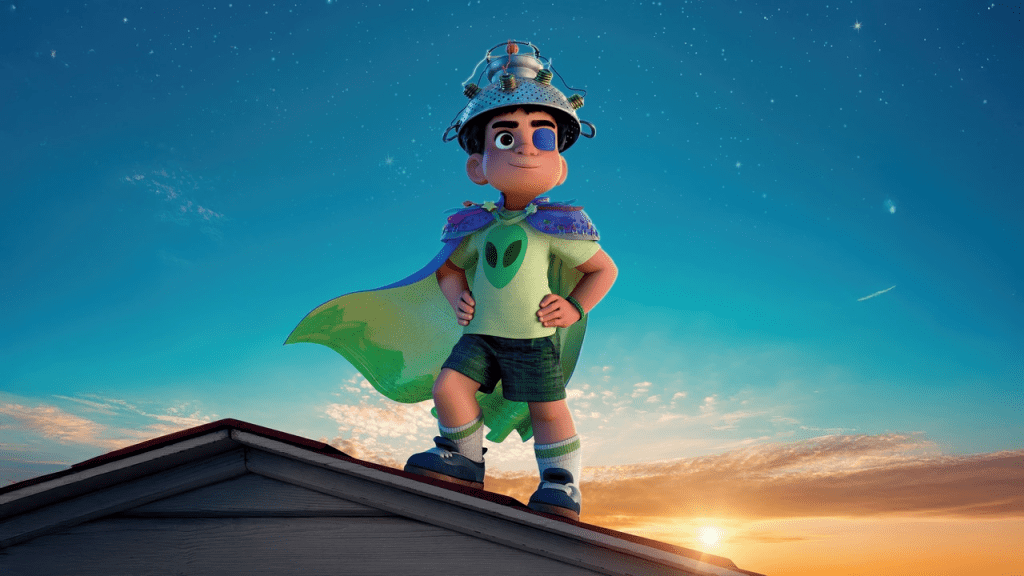
Meanwhile, on Earth, Olga continues growing suspicious of the clone she believes is her nephew. Despite his “normal” behavior—something she’s partially grateful for—she can’t ignore the small signs. One evening, after following him to his room and witnessing a strange, almost robotic mannerism, she confronts him. In one of the film’s most chilling sequences—a moment that genuinely flirts with horror—she lifts his eye patch and sees what’s underneath: no eye at all. It’s a moment of horror, beautifully crafted and tonally unique for a Pixar film, once again proving that Elio isn’t afraid to explore unexpected emotional territory.
Back in space, the ruse unravels. Lord Grigon quickly detects that the Glordon he’s been given is a clone. Enraged, he unleashes destruction upon the Communiverse. Questa, one of the alien leaders, probes Elio’s memories and discovers everything: the lies, the impersonation, the full emotional weight of a boy who only wanted to be seen, heard, and understood.
Elio is banished—thrust through a portal back to Earth as he watches the destruction of a world he’d come to cherish. It’s a devastating moment. But what follows becomes one of the film’s most surprising and heartfelt sequences.
By sheer accident, the real Glordon—still hidden in the escape shuttle—crash lands on Earth. As Elio emerges from the water near Olga’s work base, he spots her by the shore… along with his clone. The clone wanders off, making space for a quiet, emotional reunion. Olga, still unsure if she’s seeing the real Elio, hesitates—until she notices a beach setup sending a signal to the stars, just like the one Elio once made. She removes his eye patch to confirm what her heart already knows: this is her real nephew. The one who never stopped searching for connection.
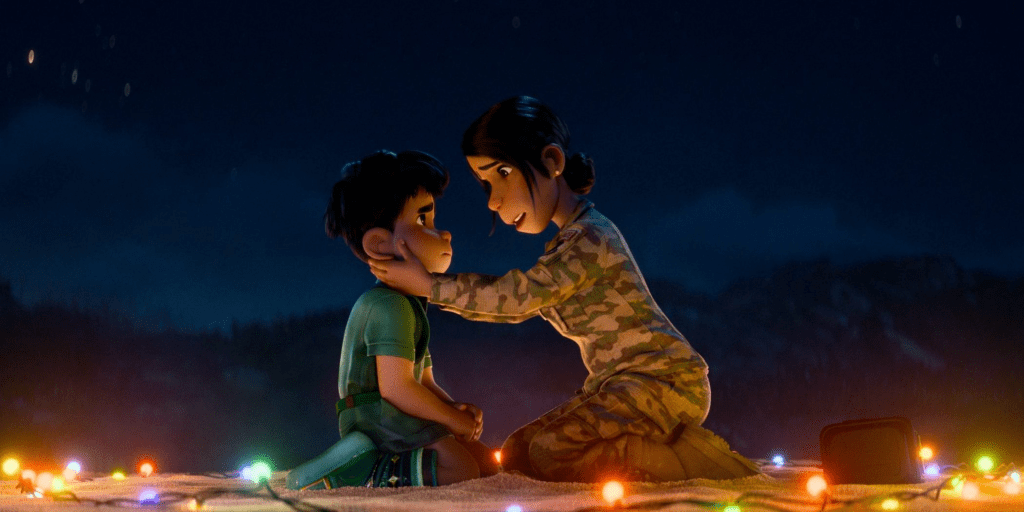
But there’s no time to waste. The shuttle carrying Glordon has crashed nearby. Olga and Elio race to save him. In a final act of sacrifice, the clone Elio creates a distraction—yet another horror-tinged scene that doubles as a poetic end for a character who never truly belonged.
They retrieve Glordon, freezing and near death. The translator device that allowed him to understand Elio has been damaged. The humans on base want to contain him, but Olga speaks to her nephew in “Elionese”—a made-up language known only to Elio and his parents. It’s a moment of maternal instinct, of knowing someone beyond words. The signal is received, and the shuttle launches.
As they journey back through space, they’re bombarded with deadly debris. In one of the film’s most beautiful sequences, the radio onboard picks up transmissions from around the world. People—children and adults alike—respond to Elio’s earlier message, guiding them through the chaos. Voices from different countries and languages fill the airwaves, uniting in a shared moment of hope. What began as a lonely boy’s desperate cry for connection becomes a chorus of global compassion.
When they return to the Communiverse, Glordon is placed into his father’s arms. Lord Grigon, unexpectedly moved, breaks free of his war armor to cradle his son. It’s the emotional climax of the film—a visual metaphor that says more than any line of dialogue could. He chooses fatherhood over pride, love over domination.
And back on Earth, Olga has already shown that same kind of love. From calling out the clone to speaking Elionese, she proves she knows Elio—not just his behavior, but his essence. Her care, though rough at times, is rooted in devotion.
The story ends with Elio being offered a permanent position as the Communiverse’s ambassador. But he declines. His place, he says, is on Earth. With his people. With Olga. As he and his alien friends say their goodbyes, Ooooo removes the translation devices that allowed them to understand each other. Their words are now unintelligible—but the emotion lingers. The affection, the gratitude, the bond—they remain crystal clear.
In the post-credits scene, we see Elio and Bryce—one of the boys who once stood by as he was bullied—now full-fledged friends. Together, they use their ham radio to contact Glordon. A perfect final beat: this story was always about communication, about understanding across differences, and about what happens when someone dares to reach out and say, “I’m here.”
While Elio may not have broken ground in its sci-fi storyline—aliens, outsider syndrome, chosen family—we’ve seen that before. What was different was who was at the center: a young Latine boy, softly queer, navigating identity and empathy. That was new. That was needed. And it was gutted.
These shifts were enough to prompt Molina to exit the project. America Ferrera, initially cast as Elio’s mother, left as well—her character reworked into a more distant Air Force major aunt after the original maternal arc was scrapped. Other Pixar creatives followed, voicing their disappointment with the film’s shift away from its original vision. One even called the final cut “totally nothing.”
And that’s the real tragedy.
Meanwhile, just weeks after Elio premiered and as Superman (2025) hit theaters, critics debated whether James Gunn’s take was “too woke.” But Gunn had the benefit of brand recognition, blockbuster appeal, and a loyal fan base. He could afford the trolls. Elio couldn’t. It was an original story from a marginalized voice, and instead of protecting that voice, the studio compromised it.
We keep hearing calls for originality in cinema—no more sequels, no more reboots—but when something truly original comes along, audiences stay home. Or worse, they only show up once it’s been diluted beyond recognition. We failed Elio. And we failed Molina.
And let’s not ignore context. In a city like Los Angeles—one of the entertainment capitals of the world and home to a massive Latine population—Elio should’ve resonated. But with a wave of ICE raids across the country and real fear spreading through immigrant communities, a story about belonging and identity didn’t stand much of a chance. Especially when its most vulnerable, radical elements had already been sanitized.
Had Molina’s original vision remained intact, the film may not have appealed to everyone—but it would’ve resonated powerfully with the ones it was made for. And that’s the kind of impact that lasts longer than a weekend gross. After all, Coralie Fargeat’s The Substance was polarizing too—critics said it was 20 minutes too long. She disagreed. She stood by it. And she made it to awards season.
We, the so-called lovers of original storytelling, have to ask ourselves: do we really want new voices and fresh perspectives, or are we just addicted to the idea of them?
Because if we keep showing studios that art only matters when it’s safe, familiar, and sanitized, we’re going to keep losing films like Elio — stories that might’ve changed someone’s life, had we let them live.
 818 Lens