
Release Date: January 27, 2025 (Sundance premiere); U.S. limited theatrical release June 27, 2025; wide release July 18, 2025
Runtime: 103 minutes (1 h 43 m)
Rating: R (sexual content and language)
Production Companies: Pastel, Big Beach, High Frequency Entertainment, Tango Entertainment
Producers: Adele Romanski, Mark Ceryak, Barry Jenkins
Cinematography: Mia Cioffi Henry
Music: Lia Ouyang Rusli
Sorry Baby (2025)
Director: Eva Victor
Writer: Eva Victor
Starring: Eva Victor, Naomi Ackie, Lucas Hedges, John Carroll Lynch, Louis Cancelmi, Kelly McCormack
⚠️ Trigger Warning: This review references themes of sexual assault and trauma.
Eva Victor cements herself as a standout storyteller in her feature debut—writing, directing, and leading Sorry Baby with grit, heart, and a voice that’s refreshingly her own. What she captures isn’t just the events that shape a person, but the fragmented, often disorienting way we feel our way through them. Life here unfolds at the emotional tempo of a rollercoaster—where joy, confusion, grief, and awkward humor constantly collide.
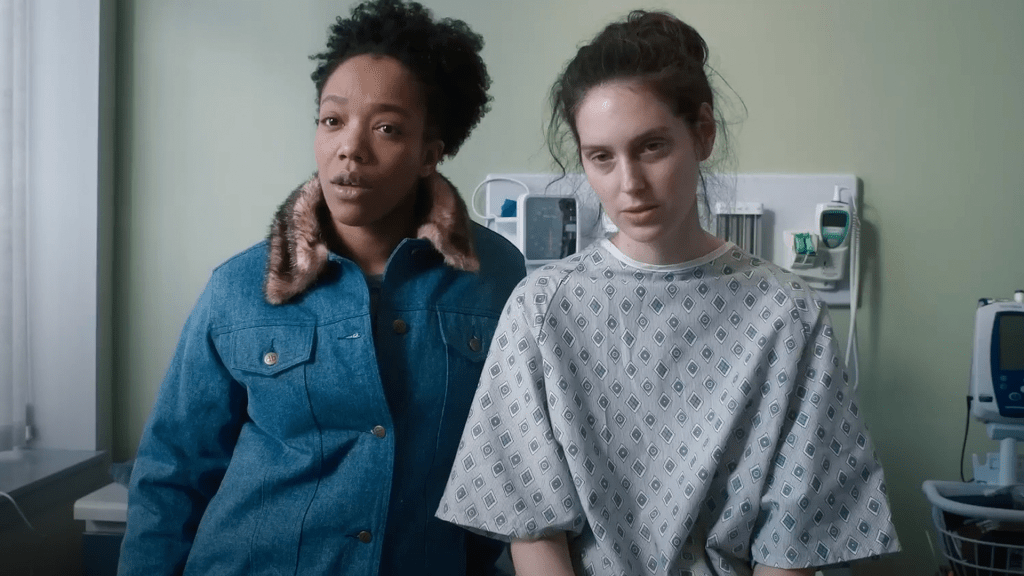
Victor’s performance as Agnes, a college professor stuck in emotional stasis, is both restrained and cuttingly vulnerable. When Agnes reconnects with her old grad school friend Lydie (played with charm and gravity by Naomi Ackie), their reunion quietly highlights how time and life have moved differently for each of them. As Lydie returns to New York, pregnant and changed, Agnes remains in her college-town cocoon—marking the first of many ruptures in a nonlinear narrative that gradually fills in the pieces.
Rather than focus on a single traumatic event, Victor’s script examines its afterlife—how those emotions and unspoken weight show up unexpectedly in classrooms, HR meetings, doctor’s offices, and sandwich shop parking lots. Her refusal to cleanly label what Agnes endured (an ambiguous experience involving a professor) underscores how complicated and personal these experiences are, especially when institutions fail to provide clarity or justice. In one scene, when a doctor coldly uses the word “rape,” Agnes recoils—not because it’s inaccurate, but because the language feels too clinical, too definitive for something that felt slippery, confusing, and intimate in its betrayal.
Victor’s greatest achievement is how she evokes that discomfort without ever exploiting it. Through clever dialogue, raw silences, and jarringly mundane interactions, she lets us feel how trauma works—not in tidy arcs, but in fragments. The nonlinear structure mirrors that truth: healing is not a straight line. Sometimes you move forward. Sometimes you stall. Sometimes you borrow lighter fluid from your neighbor and stare at a cat long enough that it becomes yours.
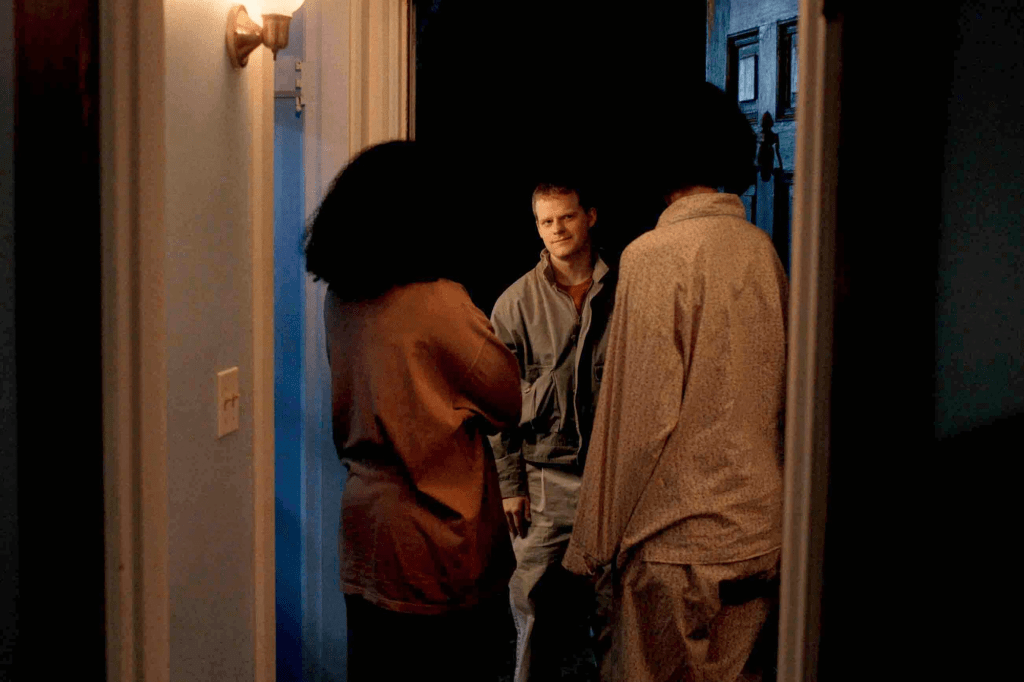
Naomi Ackie and Lucas Hedges offer strong support, representing different kinds of connection—one platonic and rooted in history, the other complicated and neighborly in a way that brings a quiet spark to Agnes’s solitude. Hedges brings Gavin to life with offbeat warmth, but one of the film’s most affecting moments belongs to John Carroll Lynch in a parking lot scene—an unexpected encounter that demonstrates how a moment of kindness from a stranger can ripple through someone’s life.
Victor doesn’t use humor to undercut seriousness—she uses it to survive it. The film falls into what some have coined “traumedy,” and Sorry Baby nails the blend, capturing how absurd and surreal the real world feels when you’re grieving or just trying to make it to the next day.
What’s especially refreshing is Victor’s decision not to lean on romantic resolution. Instead, friendship—particularly between Agnes and Lydie—anchors the emotional core of the film. Their chemistry is electric but never forced. The film begins and ends with their quiet reunions, bookending the chaos of Agnes’s inner life with moments of steady, unconditional support. Whether Lydie shows up pregnant or with a baby and gender-neutral partner in tow, the emotional truth between them doesn’t waver.
Some may find the film’s pacing deliberately slow or its silences heavy, but that’s part of Victor’s design. She invites us to sit with Agnes—in her boredom, in her anxiety, in her unexpected grace. One scene might linger on a job offer, another on a panic attack, and another on a near-psychotic (but oddly justified) daydream about setting a professor’s office ablaze. But each scene matters. Every small encounter, every pause, builds Agnes back up.
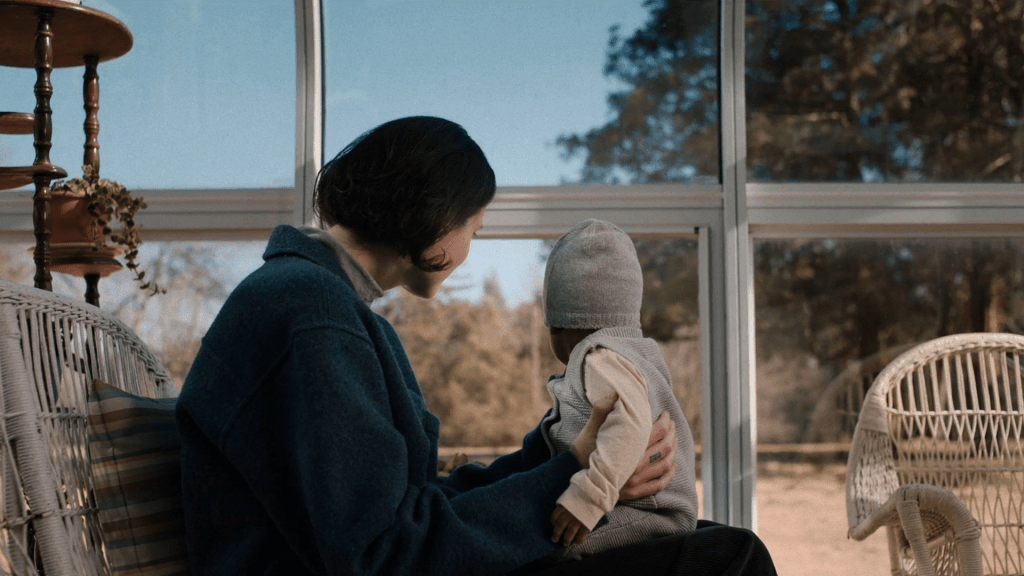
By the end, Victor has quietly shown us a transformation—not from broken to healed, but from muted to empowered. From a woman unsure of how to talk about what happened to someone willing to simply say “sorry, baby” to the next generation—to the child who will inherit a world that’s not yet safe, but can still be tender.
Sorry Baby is a remarkable debut—unflinchingly honest, bitingly funny, and emotionally complex. Victor proves herself not just as a filmmaker to watch, but as a voice that understands the beauty and brutality of everyday life. With a stellar cast, sharp writing, and gorgeous, observational cinematography, this is one of the year’s most affecting films so far. And it’s only the beginning for Eva Victor.
 818 Lens