Release Date: U.S. release July 25, 2025; world premiere July 21, 2025
Runtime: 115 minutes (114 min 29 sec)
Rating: PG‑13 (for sci‑fi action violence and thematic elements)
Production Companies: Marvel Studios & 20th Century Studios; distributed by Walt Disney Studios Motion Pictures
Producer(s): Kevin Feige (producer); executive producers Louis D’Esposito, Grant Curtis, Tim Lewis; co‑producer Mitch Bell
Cinematography: Jess Hall
Music / Composer: Michael Giacchino
Fantastic Four: First Steps
Director: Matt Shakman
Writers: Josh Friedman, Eric Pearson, Jeff Kaplan, Ian Springer (story by same plus Kat Wood)
Starring: Pedro Pascal, Vanessa Kirby, Joseph Quinn, Ebon Moss‑Bachrach, Julia Garner, Ralph Ineson, Paul Walter Hauser, Natasha Lyonne
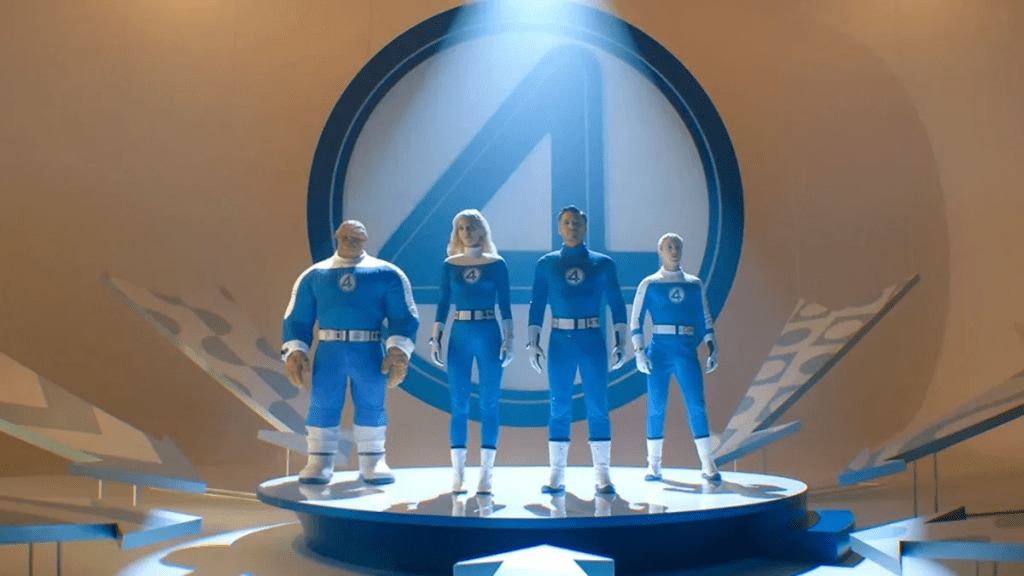
It’s easy to joke that the bar for Fantastic Four films wasn’t exactly high after the last two misfires—but First Steps doesn’t just clear that bar, it leaps far past it. This new entry honors the comics, the characters, their creators, and the legacy they’ve left behind, while injecting the MCU with a much-needed sense of freshness. What immediately sets this film apart is its 1960s retro-futurist aesthetic—a bold, visually arresting choice that feels unlike any other MCU project outside of WandaVision (another Shakman creation). And here, that same stylized worldbuilding doesn’t feel like a gimmick; it works hand in hand with the story and gives this film its own distinct personality.
Vanessa Kirby, Pedro Pascal, Joseph Quinn, and Ebon Moss-Bachrach bring the Fantastic Four to life on Earth-828 in 1960. The film smartly skips yet another origin story—most audiences already know who the Fantastic Four are—and instead drops us straight into the middle of Reed Richards and Sue Storm’s relationship. Their love, their conflicts, and Sue’s impending motherhood become the emotional throughline of the story. Kirby and Pascal’s chemistry is magnetic and intimate; it feels lived-in, grounded, and deeply human, giving weight to the film’s family-driven themes.

Quinn and Moss-Bachrach shine in their own way as Johnny Storm and Ben Grimm. Their friendship and banter feel effortless, and even though their powers aren’t explored as deeply as you might expect, they add a needed warmth and humor to the group dynamic. When the team learns of Sue’s pregnancy, the tone of the film subtly shifts—not just for the characters, but for us as viewers. It reinforces that the heart of this story isn’t cosmic stakes, it’s the bonds of chosen family.
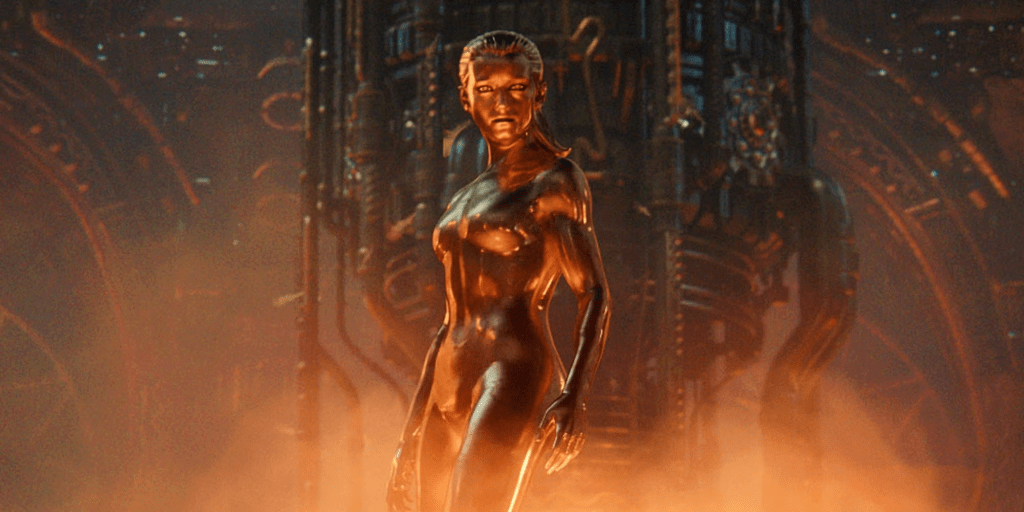
Julia Garner’s Silver Surfer is easily one of the most compelling “villains” the MCU has delivered in years. Her portrayal is nuanced, layered, and invites a love/hate relationship. You empathize with her motives even as you question her actions, and Garner makes you feel every ounce of her internal conflict. She doesn’t just play the role—she owns it, delivering a performance that lingers long after the credits.
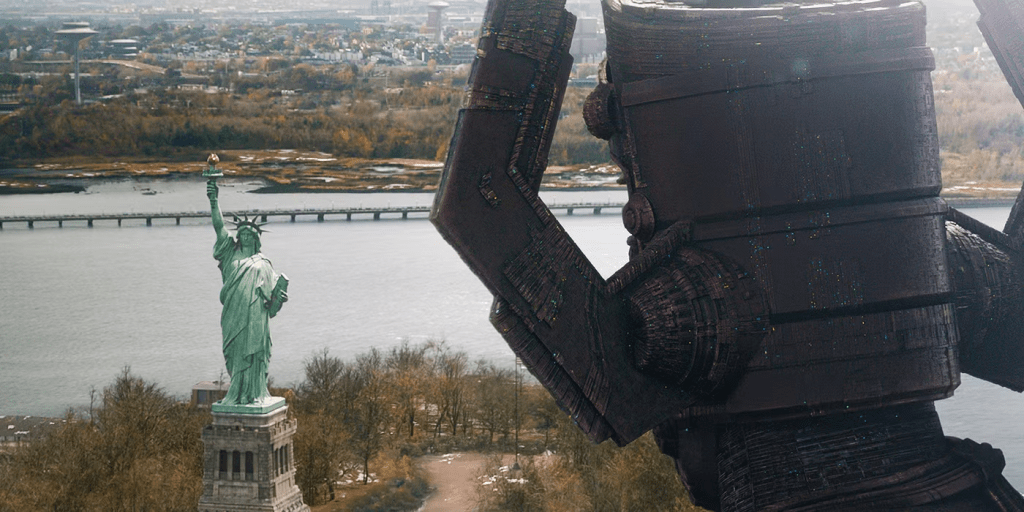
Ralph Ineson’s Galactus, meanwhile, is more of an ominous, towering force than a fully fleshed-out character, but he’s effective. His deep, resonant voice and sheer scale make him a mythic, terrifying presence. Visually, Galactus is a triumph—he practically feels like a moving set piece, an overwhelming figure that dominates every frame he’s in. The CGI across the board is stunning, from the Silver Surfer’s shimmering, cosmic sequences to the intricate otherworldly environments. It’s the kind of visual effects work that reminds you what Marvel can accomplish when it takes its time.
Ultimately, the Galactus–Silver Surfer duo works beautifully. Garner brings the humanity, Galactus brings the spectacle, and together they foreshadow larger cosmic storylines yet to come—especially subtle hints involving Sue Storm.
It’s difficult to single out one performance as the true standout because the ensemble works so seamlessly together, but Vanessa Kirby carries the film with quiet, emotional strength, while Julia Garner delivers its most surprising and layered turn. The rest of the cast supports them perfectly. Pascal’s Reed Richards is an intellectual anchor whose genius is on full display here, even if his elastic physical powers take more of a backseat. Joseph Quinn gets the flashiest moments as Human Torch, while Moss-Bachrach’s Thing provides grounded humor and heart.
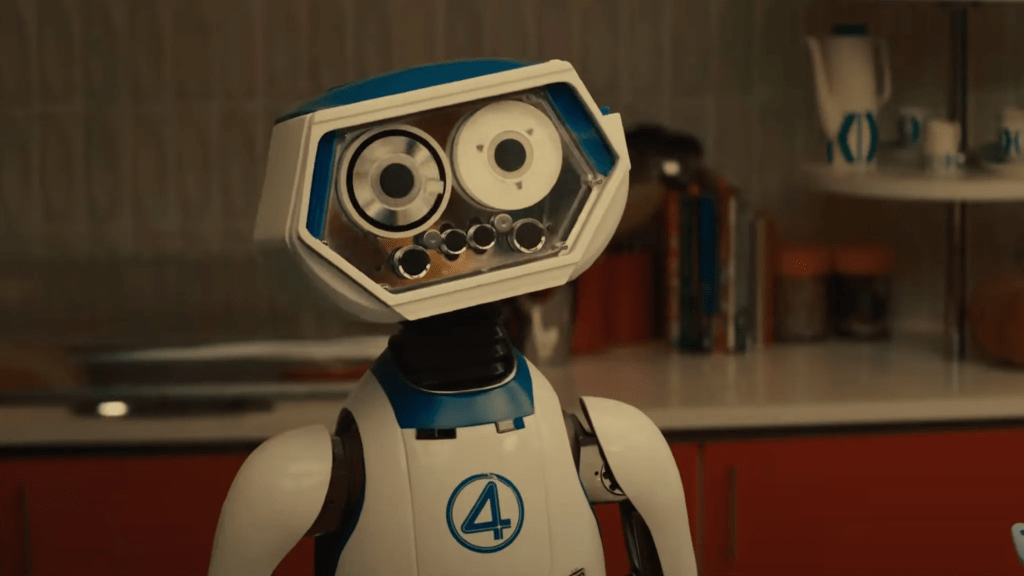
And then there’s H.E.R.B.I.E.—the team’s trusty robot companion. He’s more than just a nostalgic Easter egg; he’s a surprisingly funny, charming addition who doubles as comic relief and caretaker. Longtime fans will appreciate the nod to his 1978 animated origins, while newcomers will simply enjoy his personality.
What really makes First Steps stand out isn’t the action (which is far more restrained than you might expect from a Marvel film), but the emotional and dramatic beats. The movie spends more time on relationship-building—between the team, with the Silver Surfer, and even glimpses into the personal lives of Ben Grimm and Johnny Storm—than on high-octane fight scenes. And it works. The action supports the story, not the other way around. When the film builds to its moral conflicts midway through, you feel the tension. It makes you stop and wonder: what would you do if put in their position?
The pacing is brisk yet balanced. By throwing us straight into the middle of the story, it avoids the drag of another long-winded setup. Instead, it feels like we’re catching the team mid-chapter, and it carries that momentum all the way through without losing focus.
It’s tempting to compare First Steps to James Gunn’s Superman—both embrace sincerity and optimism in a superhero genre that has spent years leaning too far into cynicism. They remind us that heroes can be hopeful, flawed, and genuine all at once. This feels like a Marvel film from the tail end of the Avengers era, but with fresh life breathed into it—a continuation and a reinvigoration at the same time.
If the MCU felt like it was stumbling post-Endgame, this film feels like a step in the right direction. Thunderbolts cracked the door open for a comeback; Fantastic Four: First Steps pushes it wide. It’s a story about family—not just the one you’re born into, but the one you choose and fight for.
Oh, and don’t leave when the credits roll. There are two post-credit scenes you’ll want to catch—one sets up the team’s next big challenge in a way that could shake up the MCU’s future, while the other is a lighter, more entertaining nod for fans.
Ultimately, First Steps isn’t just a return to form for this franchise—it’s a promise that the MCU can still surprise us. Between the gorgeous set design, the retro-futuristic aesthetic, a star-studded cast firing on all cylinders, two layered antagonists, and a heartfelt narrative, it’s one of Marvel’s most entertaining—and most human—films in years.
 818 Lens