Release Date: July 18, 2025
Runtime: 111 minutes (1h 51m)
Rating: R (for gore, language, mature themes)
Production Companies: Columbia Pictures, Screen Gems, Original Film
Producer: Neal H. Moritz
Cinematography: Elisha Christian
Music / Composer: Chanda Dancy
I Know What You Did Last Summer (2025)
Director: Jennifer Kaytin Robinson
Writers: Robinson and Sam Lansky (story with Leah McKendrick)
Starring: Madelyn Cline, Chase Sui Wonders, Jonah Hauer-King, Tyriq Withers, Sarah Pidgeon, Jennifer Love Hewitt, Freddie Prinze Jr.
⚠️ Spoiler Warning: This review contains major plot details and character reveals from the latest installment of the franchise. Read at your own risk if you haven’t seen the film yet!
Summer slashers are comfort food for horror fans. Pretty people making bad decisions. Secrets buried under fireworks and late-night drives. Brutal deaths that are ironic, grim, and sometimes darkly funny. I Know What You Did Last Summer taps into all of that and leans hard into its legacy. It’s a legacy sequel that bridges old and new, packed with callbacks for longtime fans but still designed to hook a Gen-Z audience. It works in flashes—clever nods, a great cast, some tense moments—but it also spirals into messy storytelling in the back half, where you really start to feel the seams.
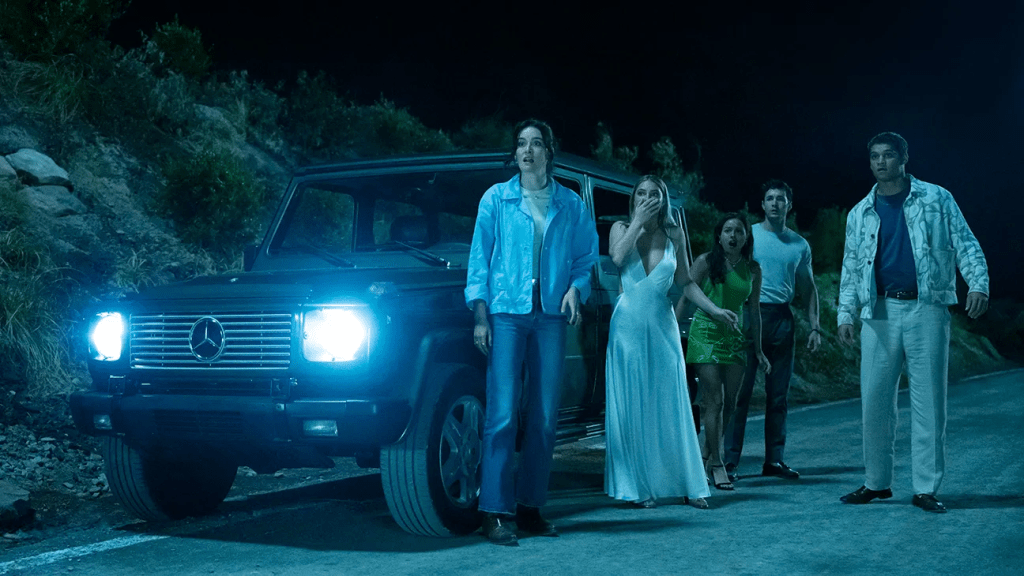
The setup is solid and familiar. Ava Brucks (Chase Sui Wonders) returns to her hometown of Southport for best friend Danica Richards’ (Madelyn Cline) engagement party. It’s an awkward reunion—time and distance have left cracks in their once-tight bond. The party itself is loud, chaotic, and packed with faces from their past: Milo (Jonah Hauer-King), the politically-minded charmer who has an undefined “something” with Ava; Teddy (Tyriq Withers), Danica’s loud, entitled fiancé; Stevie (Sarah Pidgeon), an old friend who’s been estranged and working through her own personal messes.
The celebration feels lively but uneasy. Ava is trying to find her footing again in a town she left behind. Danica, though glowing with the surface-level happiness of an engagement, seems stressed, jittery—like she’s barely holding things together. It’s the perfect storm for what’s coming.
Later that night, the group decides to head to the hills for a better view of the Fourth of July fireworks. As they’re all filing out of the party, they run into Stevie outside, packing things up into the back of her car. It’s slightly awkward—there’s history between her and the group—but after a brief moment of hesitation, they invite her along for the ride.
Here’s where it all unravels. Teddy, clearly wasted, decides to “prank” Danica by suddenly screaming at her to “look out!” She panics, slamming on the brakes. They pull over to the shoulder, hearts pounding. And instead of diffusing the tension, Teddy escalates—he gets out of the car and starts dancing in the middle of the road, taunting fate. A car swerves just in time to avoid hitting him. But moments later, another car isn’t so lucky. It comes barreling around the curve, clips the edge of the road, and teeters off the cliff.
They rush to the edge and see the car hanging there, its driver—Sam Cooper—trapped inside. They try to help him, but the cliff gives way. The car plunges into the water below. Silence. No one moves. No one breathes. And then the panic sets in.
This is where the moral dilemma kicks in, echoing the original film. Do they call the cops and explain what happened? Do they risk ruining their lives? Teddy argues to keep it quiet. Stevie wants to walk away. Ava hesitates but eventually caves to the fear of what telling the truth could cost them. And just like that, the group makes a pact. They won’t speak of this again. They scatter, haunted and fractured.
This whole opening works. It’s tense, believable, and sets up the guilt that will eat at them later.
Fast forward a year. Ava returns to Southport once again, this time for Danica’s bridal shower. On the way, she meets Tyler (Gabriette Bechtel), a true-crime podcaster who’s in town digging into the infamous 1997 Southport massacre. It’s a clever meta-layer, connecting this new cast to the lore of the original. Milo picks them both up, and the old group is together again, if only for a day.
At the shower, everything feels superficially normal until Danica starts opening gifts. Mixed in with the ribbons and well-wishes is a plain envelope. No name. Just a note inside: “I know what you did last summer.”
Danica pauses. She doesn’t make a scene—there are too many eyes on her, too many people who can read her face. The ones who know… know. She forces a polite smile, masking the wave of dread rising in her chest. Only later, after the gifts are opened and the guests are gone, does she quietly pull Ava, Milo, and Teddy aside. It’s then that she confides what the note said and admits she suspects Teddy may be trying to mess with her.
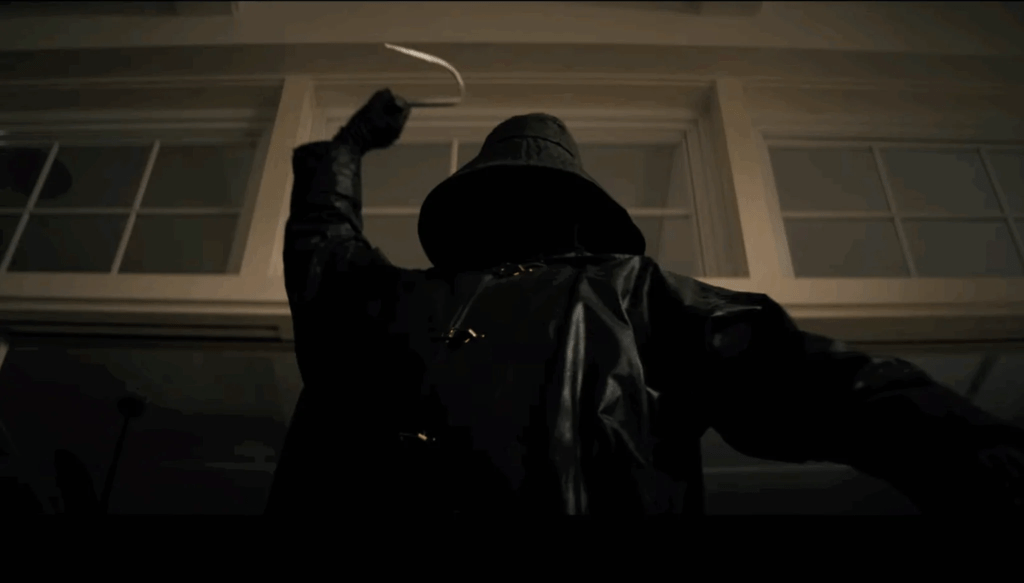
That night, the tension pays off. Danica is at home, venting to her soon-to-be husband Wyatt about the stress she’s under. She retreats upstairs for a bath, headphones on, meditating, trying to drown out the world. Meanwhile, downstairs, Wyatt is ambushed by a figure in a fisherman’s slicker—the same iconic look from the original. He’s killed brutally, silently, while Danica is completely oblivious upstairs.
It’s an effective scene. Simple, but the juxtaposition—her calm bath versus his violent death—is chilling. It’s also the first real kill, signaling the start of the spiral.
After Wyatt’s death, the group reunites at the police station, panicked. Ava stays with Danica, who admits she thought Ava had been avoiding her all year out of blame for keeping the secret. Their guilt is mutual, and the weight of that decision hangs heavy between them.
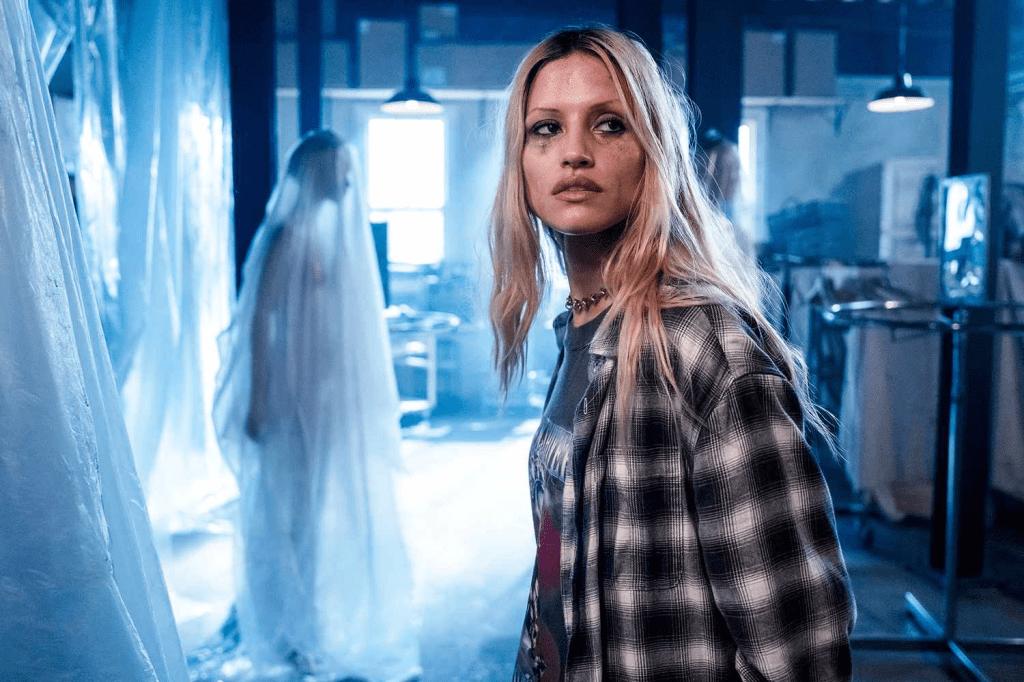
The investigation starts pulling in pieces of Southport’s history. Ava teams up with Tyler, the podcaster, who takes her to the Bayside House—a now-abandoned department store where Elsa and Helen Shivers were murdered decades earlier. It’s a great callback for fans, and the location feels eerie, haunted by the past.
But their exploration is cut short. The fisherman killer appears. Tyler tries to escape through a window but is caught and killed in a grim, sudden moment—hanged and tossed out the window like a discarded doll. Ava is left trapped, narrowly escaping but traumatized.
From here, the group scrambles for answers. They dig into the car’s history and discover it belonged to Father Judah, a local worship leader tied to Sam Cooper, the man who died that night. Danica and Teddy visit Sam’s grave and find fresh flowers—a sign someone is still mourning him. They ask the cemetery worker for security footage, but before he can deliver it, he’s murdered, and Danica is attacked in a chase sequence that feels straight out of classic slasher playbooks. Teddy arrives just in time to shove the killer away… but of course, the killer vanishes.
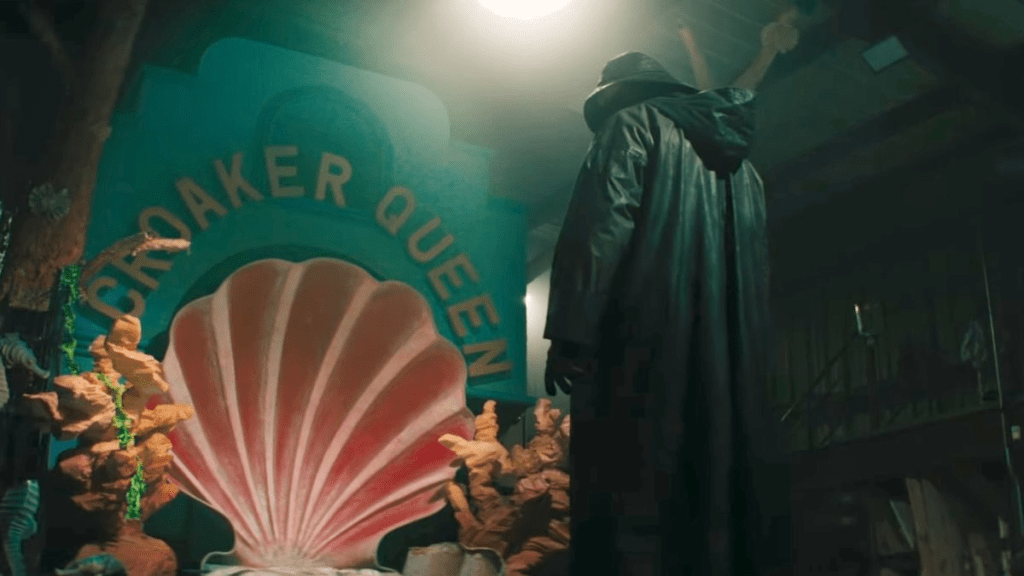
Then comes the film’s best sequence: Danica falls asleep and dreams she’s in the police station, walking into a dimly lit room where she finds her ex-fiancé’s body being washed over by none other than Helen Shivers. Sarah Michelle Gellar steps back into the role like she never left.
The scene is haunting, surreal, and beautifully directed. It doesn’t overstay its welcome, but in just a few minutes, Gellar owns the film. She delivers a chilling monologue about guilt and consequences, slowly turning on Danica, her face decaying in front of her eyes. It’s eerie and poetic—the exact kind of scene this movie needed more of. It’s also a huge nostalgic gut punch, especially since Gellar did press saying she wouldn’t return. It’s a true surprise, and easily the best part of the film.
Unfortunately, after the dream sequence, the film starts to lose control. The group’s plan to involve the police goes nowhere—history repeats itself, just like the original massacre. More bodies pile up, and the killer’s identity seems obvious… until it’s not.
The final act reveals that Stevie has been working with the killer out of revenge—Sam Cooper was her friend from rehab, and she blames the group for his death. That reveal almost works. But then comes the second twist: Ray Bronson, yes, Ray, is also a killer. His reasoning? He resents what Southport has become, feels like the town erased the trauma of the past, and empathized with Stevie’s pain.
It’s a reach. The Ray reveal feels forced and illogical, more like a way to shock fans than a natural progression of his character. It’s the point where you really feel the writing straining, where suspension of disbelief starts to snap.
The climax plays out on a boat, with Ava and Danica fighting for their lives. Ray is ultimately killed, Ava survives (barely), and Danica washes up on shore. They reunite in a hospital bed, bonded as final girls, but the ending doesn’t land as cleanly as it should.
Post-Credit Tease & The Bigger Picture
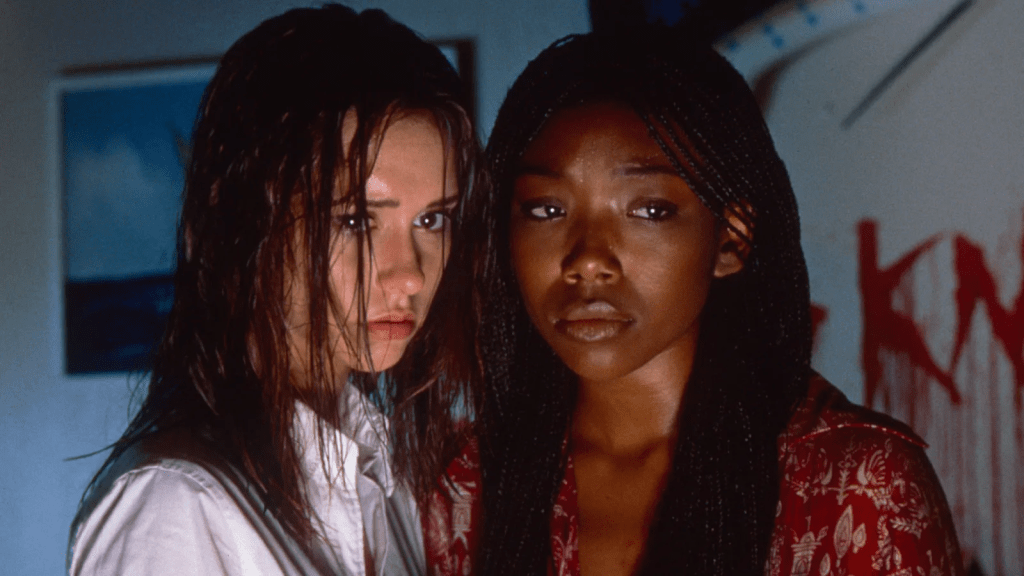
But wait—there’s one last hook. In a post-credit scene, we see Karla Wilson (Brandy Norwood from I Still Know What You Did Last Summer) watching the news about Julie James. She cracks a joke about how Julie can’t catch a break—just as Julie herself shows up at her door with another ominous note. It’s a fun, cheeky tease that sets up an even bigger universe.
It’s not just a cameo; it’s a quiet promise that the franchise has more to say. By weaving together these legacy characters with a new generation of survivors, the film hints at something bigger on the horizon—a broader universe that might finally connect the loose threads of this series in a meaningful way.
Final Verdict
I Know What You Did Last Summer isn’t a hollow nostalgia trip. It has moments of genuine tension, a well-cast group with great chemistry, and some clever nods to its roots. Sarah Michelle Gellar’s cameo is unforgettable, and the kills—while not wildly inventive—are atmospheric and appropriately grim.
But the writing is uneven. The Gen-Z lingo is hit-or-miss, the third act gets messy, and the Ray twist doesn’t hold up under scrutiny. It starts as a strong, suspenseful slasher but can’t quite stick the landing.
Still, it’s more enjoyable than it isn’t. It’s a flawed but entertaining summer horror flick that honors its past while teasing a potentially richer future. If nothing else, it proves there’s still life in this franchise—just waiting for the right direction to fully capitalize on it.
 818 Lens