Season / Episode: Season 7, Episode 5
Release Date: April 10, 2025
Runtime: 46 minutes
Genre(s): Science Fiction, Drama
Production: Broke and Bones
Streaming on: Netflix
Black Mirror: Eulogy

Directed by: Toby Haynes
Written by: Charlie Brooker and Ella Road
Starring: Paul Giamatti and Patsy Ferran
Among the most memorable episodes of the season, Eulogy boldly inverts the typical Black Mirror formula. While other installments often delve into the complexities and potential darkness of artificial sentience, “Eulogy” uses future technology not to explore a dystopian outcome, but rather to facilitate profound emotional closure for a character grappling with long-standing regret.
True to form, Charlie Brooker masterfully examines the raw human emotions underpinning the technology. However, instead of focusing on a sentient AI, the episode centers on Philip’s journey through his memories, guided by an AI whose primary role is supportive. The exploration of these photographic memories becomes the anchor for a narrative deeply entwined with themes of grief, regret, and the intricate nature of relationships.
The foundation of this powerful episode rests firmly on Paul Giamatti’s exceptional performance, arguably one of the best in the series. He skillfully conveys the subtle shifts in his character’s emotional landscape as long-buried feelings surface and epiphanies unfold throughout the narrative.
Patsy Ferran, as The Guide, provides the crucial counterpoint to Giamatti’s Philip. Her initial formal demeanor gradually gives way, revealing a deeper connection to the memories they explore, a transformation that serves a significant purpose as the story progresses.
In a landscape saturated with narratives revolving around grief and loss, “Eulogy” distinguishes itself through its signature inclusion of futuristic technology. More importantly, it stands out by offering a more optimistic resolution to its protagonist’s suffering, a refreshing departure from the show’s typically bleak conclusions. The sharp banter and insightful dialogue between Philip and The Guide form the backbone of the narrative, feeling both clever and authentic. This dynamic also cleverly plants seeds of doubt, initially prompting us to question The Guide’s intentions behind her often pointed responses to Philip’s dismissive remarks about Carol.
“Eulogy” unfolds as an engrossing tale of uncovering a life, an intimate introspection of a man shaped by his past. For someone who typically avoids deep emotional engagement, the episode’s conclusion left me profoundly moved, a testament to its powerful storytelling. While Philip’s initial ignorance creates a bittersweet tension, the revelations unearthed with The Guide’s assistance evoke deep empathy, especially considering The Guide’s ultimately significant connection to these very memories.
The episode opens with our protagonist, Philip Connarthy (Paul Giamatti), tending to his garden when he receives a call regarding the death of Carol Royce. His initial reaction reveals a stark discomfort and reluctance to confront this news.
The caller explains the initiative to collect and curate memories for “Eulogy,” an immersive memorial experience. Despite Philip’s initial hesitation, the caller assures him the kit is voluntary and sends it over, leaving the decision in his hands.
The kit arrives, containing a device and a “guide disc” that begins to speak to Philip. Instructed to place it on his temple, he is prompted by the AI, referred to as The Guide (Patsy Ferran), to recall Carol and his memories of her face.
“At first a memory feels like trying to grab a river with your hands.”
– The Guide
Philip struggles to visualize Carol’s face, asking if The Guide can simply conjure an image for him. She explains the policy against external material to maintain the integrity of genuine memories. Philip mentions having physical photographs from their early days, before cloud storage existed.
He retrieves three photos:
- The Rooftop Barbecue: The day they met in Brooklyn at a “The Coop” gathering – a co-op of “…artists, musicians… misfits,” as Philip describes them. Immersing themselves in the image, he encounter the physical manifestation of The Guide. As they approach a younger Carol and Philip in conversation, he recounts their initial interaction: how he made her laugh, her recent move, her cello studies, and the fact that she had a boyfriend. The Guide points out a ring on Carol’s finger, suggesting a more serious relationship, which elicits a dismissive jab from Philip.
- Another Party: This photo features Emma (blonde), Amanda (British), and Jamo with a bong, but neither Carol nor Philip are present. However, a record playing in the image triggers a vivid memory for Philip, recalling his romantic interactions with Carol that night, which he identifies as the beginning of their romantic relationship.
- Philip in a Doorway: This image captures Philip watching Carol play her cello, unaware of his presence. He vaguely remembers the music but struggles with the specifics, mentioning it was a piece she composed. When The Guide asks for the title, Philip cannot recall it.
As they exit this last image, Philip mentions having more photos of Carol, but these are revealed to have her face scratched out, marked with pen, or physically torn away. He then confesses the depth of his love for her and the profound sense of loss and despair he felt when she left, leading to years of drinking and shame.
“Me and Carol were together 3 years. It took me 15 to climb out of the hole she put me in.”
– Philip
He acknowledges the good times but laments their irretrievable nature. When The Guide asks if he wants to stop, his resolute “No” underscores his internal conflict and the burgeoning need for closure. Giamatti’s nuanced facial expressions during these moments beautifully convey Philip’s struggle to reconcile his past with the present reality of Carol’s death.
To gain a clearer visual of Carol’s face, they delve into more photos where her face is obscured, hoping to trigger a stronger memory through the surrounding context.
The next photo transports them to a pier in Cape Cod, where Philip now resides. He recalls their first getaway, the intimacy they shared, and the exchange of “I love yous,” a moment where nothing else seemed to matter. They made plans to move in together during this trip.
Moving to a black and white photo The Guide playfully labels “arty,” they find themselves in the first apartment they shared. Carol is painting “C+P” on the wall above a small piano store. Philip’s demeanor shifts to one of eccentric excitement as the vividness of his memories returns, recalling their youthful joy.
Philip then reveals they were in a band together, leading to the next image – a photo of their band. The Guide points out that Carol played keyboards, not cello, sparking an interesting debate. The Guide champions Carol’s passion for the cello and suggests adapting the band’s sound, while Philip argues against it, insisting she could play anything.
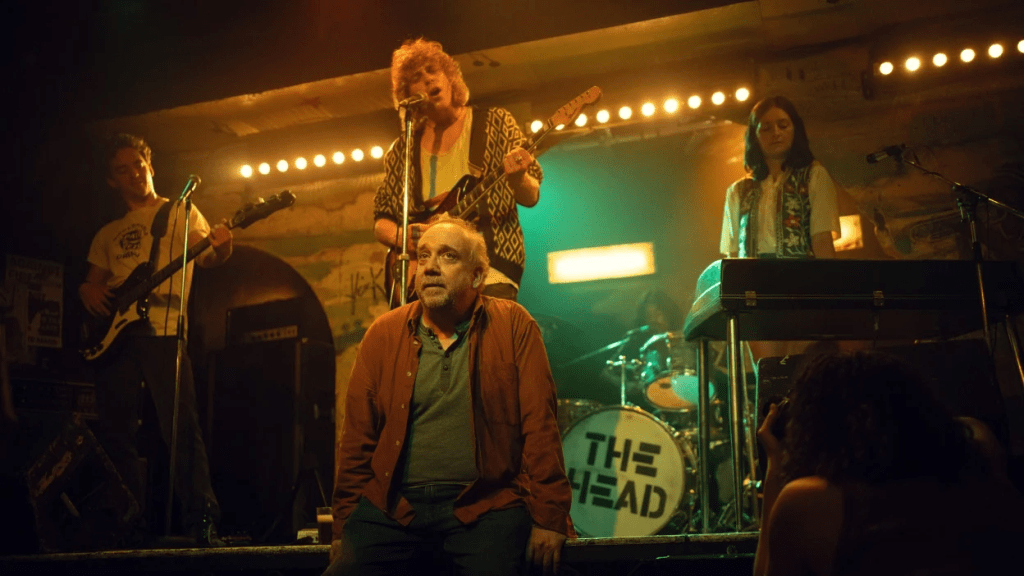
He mentions their significant local following but their eventual disbandment due to a member leaving. The argument about the cello resurfaces, with Philip stating that Carol’s heart wasn’t in it after the band broke up. The Guide’s suggestion to let Carol play cello on his behalf ignites a heated exchange, with Philip becoming condescending. He quickly apologizes, which The Guide accepts, and they move to the next picture.
A flurry of photos from Halloween 1991 at the Undervault follows. In this image, not only is Carol’s face obscured by a cigarette burn, presumably inflicted by Philip, but so is the face of the man standing next to her. Philip dismissively comments on the man’s attempt to flirt with Carol at the bar where Philip worked.
Shifting to the bar scene within the photo, Emma, the blonde woman from the earlier party, is seen in a close, intimate position with her hands on Philip’s shoulders. He identifies her as a co-worker. When The Guide inquires about a sexual relationship, Philip deflects with an accusation of judgment. He downplays Carol’s suspicion that he encouraged Emma’s advances as mere “bar job jokes.” He then reveals that they argued about it that night, fueled by his jealousy of the man Carol was with.
He recounts how Carol blamed him for their late night, which led to her being tired for a crucial audition for the Brooklyn Philharmonic the next morning – an audition she didn’t get, though it ironically opened other doors for her.
Continuing his story, Philip searches for the next photo, mentioning Amanda’s move back to London and how she secured Carol a six-month placement in the orchestra pit for “Phantom of the Opera.”
He expresses his reluctance for her to go, while she consistently downplayed it as a short-term commitment. She sent him weekly postcards filled with poems and personal messages, all of which he defaced and scratched out.
He stumbles upon a photo of himself, clearly taken by someone else while Carol was away. Immersing themselves in the image, it’s revealed that Emma was behind the camera on his birthday. Philip struggles to admit that they had a one-night stand after he had been drinking at his birthday celebration at work.
The ringing phone in the image serves as an audio cue for Philip’s memory of Carol’s call at that exact moment. Emma answers the phone, and the situation escalates. Philip recounts a venomous argument filled with hateful words, ending with one of them hanging up, though he can’t recall who.
The Guide then subtly challenges Philip’s self-pity, suggesting that Carol’s actions, as he presents them, don’t necessarily warrant his intense victimhood.
This prompts Philip to reveal what he considers the defining moment in their relationship. He retrieves a shoebox and provides some context before pulling out the pivotal image. He had planned a surprise visit to Carol in London, booking a luxurious suite for them.
He pulls out an article about a fancy restaurant he had read about on his flight. He mentions how he managed to secure a reservation by claiming it was for a special occasion and then dramatically presents a ring box to The Guide as they enter the photo of the restaurant.
Sitting at the table in the memory, Philip recounts the events of that fateful night, describing his hopeful anticipation. He ordered champagne to celebrate his planned proposal. Overcome with nervousness, he presented the ring. He recalls Carol’s silence and her refusal to even look at him. Desperate, he pleaded for a response. Finally, he slammed his fist on the table, drawing the attention of everyone in the restaurant, and Carol simply walked out.
Silence descended in his memory, a “stink of humiliation,” as he puts it.
Here, The Guide voices skepticism about Philip’s perspective, questioning Carol’s side of the story. Would he have truly listened to her in his inebriated state? An argument ensues about the potential reasons for Carol’s wordless departure. The Guide astutely points out that Philip’s trip was intended as a visit, not a pre-arranged proposal.
The Guide then leads Philip to a startling realization: Carol was pregnant at that time. She reveals her true identity – Kelly Royce, Carol’s daughter.
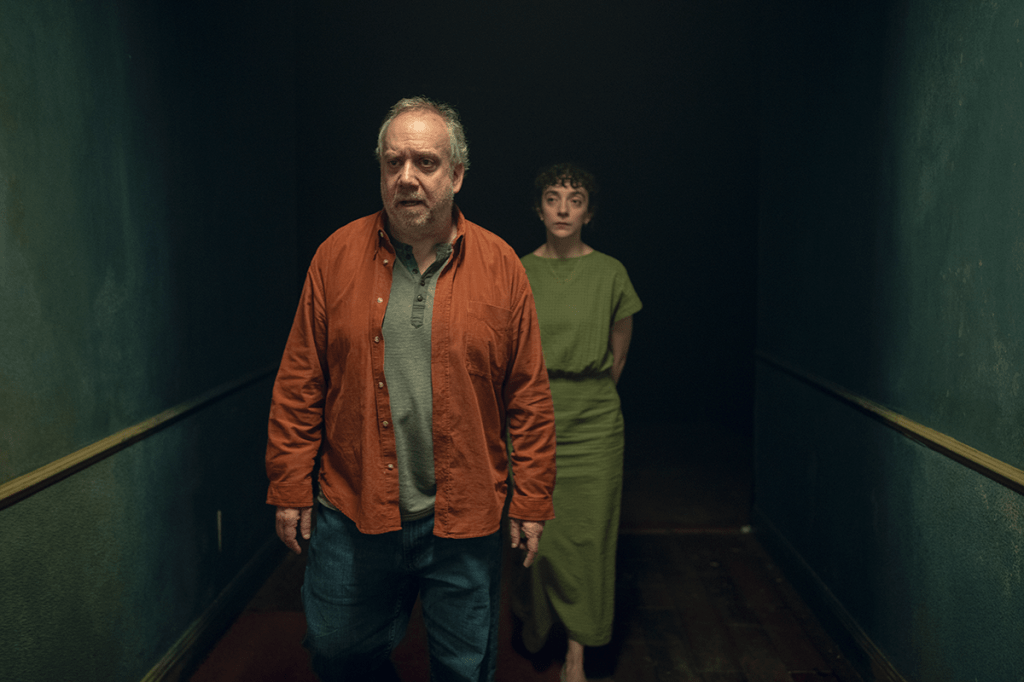
She explains that she isn’t real, but rather a disposable avatar within the immersion, programmed with her own thoughts and opinions. This allows her to carefully curate the memorial, shielding the real Kelly from potentially painful moments in her mother’s life.
The reason for her initial anonymity, she explains, was Philip’s impatient demand at the beginning to “skip the intro” and get straight to the memories.
Philip inquires about Kelly’s father, but she has limited information, knowing very little about him. She shares a somewhat pathetic account of his life, prompting Philip to berate Carol aloud, eliciting an uncomfortable look from Kelly and a subsequent apology from him. Kelly lightens the mood, remarking that her mother would likely agree with his assessment.
Kelly then reveals that Carol intended to write to Philip to explain everything, but he never responded. He vehemently denies receiving any letter, and the conversation becomes tense as Kelly defends her mother, suggesting Philip would have pressured her to terminate the pregnancy. Philip retorts that he would have at least listened and had a conversation. They exit the memory.
Philip retrieves a disposable camera with only one photo taken, which he rushes to develop.
Returning with the developed picture, they immerse themselves once more. The photo is simply of the hotel room floor, taken moments after the disastrous proposal, capturing the aftermath of Philip’s frustrated outburst. As Kelly walks around the room in the memory, she spots a letter on the floor addressed to “Philly,” Carol’s affectionate nickname for Philip.
Philip claims he never saw it and desperately tries to pick it up within the memory, his emotions escalating as he grapples with the intangible nature of the past.
Kelly urges him to recall what happened after leaving the restaurant. He remembers drinking heavily and returning to find the room cleaned, his belongings neatly piled by the maid. This triggers a memory of still having that small pile stored away somewhere.
He frantically flips through the pamphlets and documents in the shoebox, finally causing a letter to fall out.
“Philly” is written on the envelope.
In a voiceover, Carol’s words from the letter unfold as a montage of her actions after the restaurant plays out: she returns to the hotel to pack her belongings. “Please don’t hate me,” she pleads. She expresses her anger about Emma on Philip’s birthday and confesses her one-night stand with Kelly’s father, emphasizing its lack of significance and her remorse. She then reveals her pregnancy and her fear of telling Philip due to his unpredictable reactions, but expresses her desire to keep the baby.
She leaves Philip with the decision to continue their relationship, suggesting he meet her at the stage door after her matinee performance the next day if he chooses to. Philip’s face in the memory registers profound remorse, shock, and disappointment as Carol acknowledges his potential desire never to see her again. She closes the letter with a hopeful “I love you.”
Philip emerges from the memory frantic, shaking, and sobbing.
The Guide offers a gentle apology as Philip reaches into a drawer and pulls out a cassette tape labeled “For Philly.” He inserts it into a player, places the guide disc back on his temple, and looks back at the image of himself in the doorway, his voice filled with a mix of excitement and emotion. “Let’s see her,” he urges.
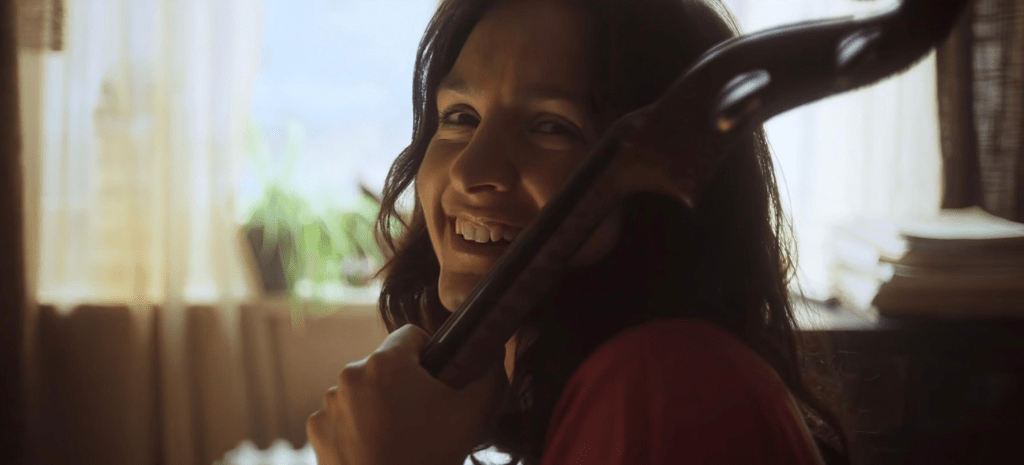
They re-enter the memory, and as the piece Carol played for him begins to play in the background, we follow Philip as he moves towards the doorway. Slowly, the camera pans to reveal Carol, now fully and vividly remembered, playing her cello. As the music swells, we cut to the funeral, where Kelly, who mentioned being taught the cello by her mother, is now playing the same piece in front of the mourners – the piece Carol wrote for Philip.
Returning to the memory, Philip continues to watch Carol play, her youthful face finally revealed, bringing a sense of closure not only to the viewers but also to Philip, tears welling in his eyes.
Ranked as one of my highest episodes of the series, “Eulogy” shines in its poignant simplicity. Even if you haven’t experienced regret on Philip’s scale, the episode’s exploration of human fallibility and the yearning for reconciliation resonates universally. Older viewers may find echoes of their own life experiences, while younger audiences might consider the potential consequences of miscommunication in their own relationships. While some may argue that “Eulogy” lacks the shock factor of other Black Mirror episodes, its strength lies in its grounded narrative and emotional depth. Giamatti and Ferran exhibit remarkable chemistry, their characters undergoing individual growth and forging an unexpected connection. In a series often defined by jaw-dropping twists, “Eulogy” opts for a more emotionally resonant conclusion, one that might just have you reaching for tissues. A rare optimistic yet deeply necessary entry in the Black Mirror universe, “Eulogy” masterfully blends visual and narrative elements, creating an experience so natural and compelling that, for once, the presented technology doesn’t feel quite so terrifying.
 818 Lens