Season / Episode: Season 2, Episode 3
Runtime: 56 minutes
Written by: Craig Mazin
Starring: Bella Ramsey, Isabel Merced, Katherine O’Hara, Gabriel Luna, Rutina Wesley, and Young Mazino
Genre(s): Post-Apocalyptic, Drama, Thriller, Horror
Production Companies: Sony Pictures Productions, PlayStation Pictures, Naughty Dog, The Mighty Mint, Word Games
Streaming On: Max
Season 2, Episode 3: The Path
Directed by: Peter Hoar
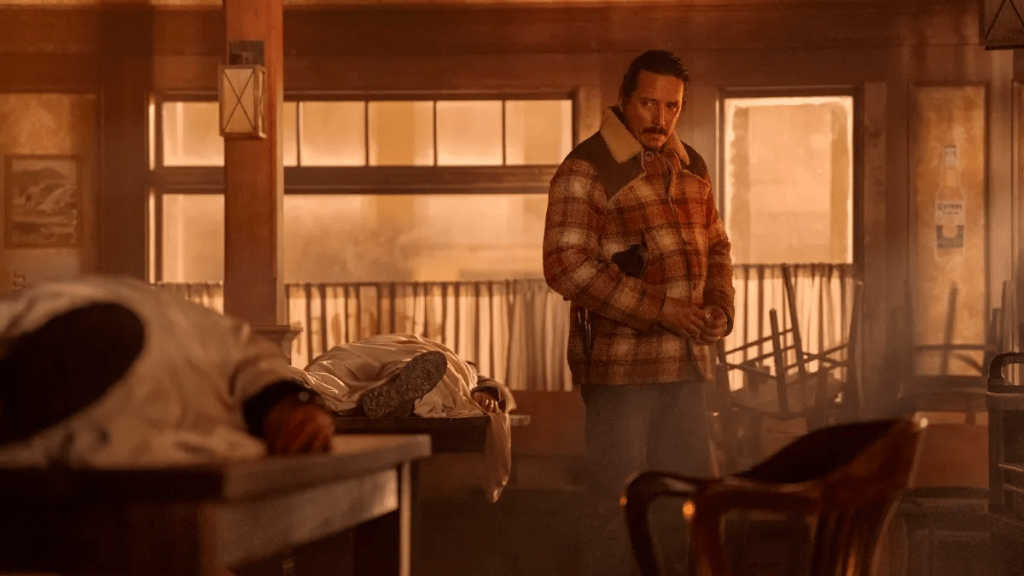
As we saw with Abby at the beginning of the season, we now open Episode 3 with Ellie and Tommy deep in mourning. We’re immediately thrown into the aftermath: Tommy cleaning Joel’s body, and Ellie awakening in the hospital, still haunted by the last moments of Joel’s life just feet from her. She snaps out of it with a chilling scream, setting the emotional tone.
The theme of revenge carries forward, seen through the perspectives of Joel’s blood brother and his surrogate daughter.
Three months later, Jackson is slowly rebuilding. Ellie, now recovered, attends a meeting with Gail, the town’s psychotherapist — and notably, Joel’s former counselor. Gail’s probing questions reveal Ellie’s guardedness, perhaps a fear of exposing just how much she truly cared for Joel.
Ellie: When I got home, he was on the porch, and I should’ve talked to him, but I didn’t.
Gail: Do you regret that?
Ellie: Yeah, of course. But your final moment with someone doesn’t define your whole time with them.
Gail: It shouldn’t, but it often does.
In Joel’s now-empty house, Ellie’s tenderness is palpable as she takes in fragments of his life. Dina arrives with cookies and valuable intel: Joel’s killers are linked to the WLF (Washington Liberation Front). This information reignites Ellie’s desire for revenge. She appeals to Tommy for help, but he urges her to first bring her case to Jackson’s council.
Meanwhile, we meet a new group: the Seraphites (or “Scars”), a religious community fleeing conflict. Their whistled communication and reverence for “the Prophet” hint at a larger spiritual mythology. As they travel, a father warns his daughter to stay distant from war, only to scatter moments later at the warning of approaching “Wolves.”
Back in Jackson, Ellie trains with Jesse, now a council member, and tries once again to rally support. He encourages her to organize her thoughts and speak clearly at the meeting.
At the council meeting, debate rages between forgiveness, survival, and the thirst for justice. Ellie delivers a composed, heartfelt speech, framing her mission not as revenge, but as justice for all of them. Even Seth — who once hurled homophobic slurs at Ellie and Dina during New Year’s — now supports her.
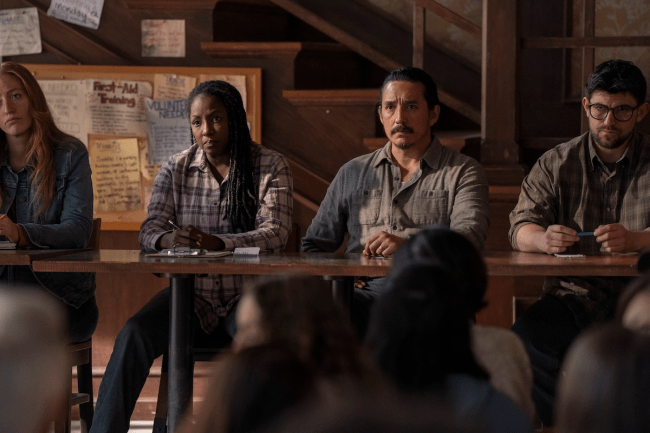
Despite her plea, the council votes against Ellie. This moment highlights a critical shift: grief is collective, not just personal. Joel’s death, while central to Ellie (and us), is only one loss among many. The show challenges us to consider the broader tapestry of grief and justice beyond our main protagonist.
After the meeting, Tommy confides in Gail during a baseball game. He reflects on the complicated relationship he now inherits with Ellie. Gail offers insight: as much as Joel tried to shield Ellie, their bond wasn’t about molding; they were kindred spirits from the start — stubborn, headstrong, survivors at their core.
If she’s on a path, it’s not one that Joel put her on. No, no. I think they were walking side by side from the very start.
– Gail Lynden
True to her nature, Ellie defies the council’s decision. She gears up for a journey to Seattle, interrupted only by Dina, who insists on joining. A surprising ally — Seth — provides supplies, forcing Ellie to reconsider her black-and-white view of people and relationships.
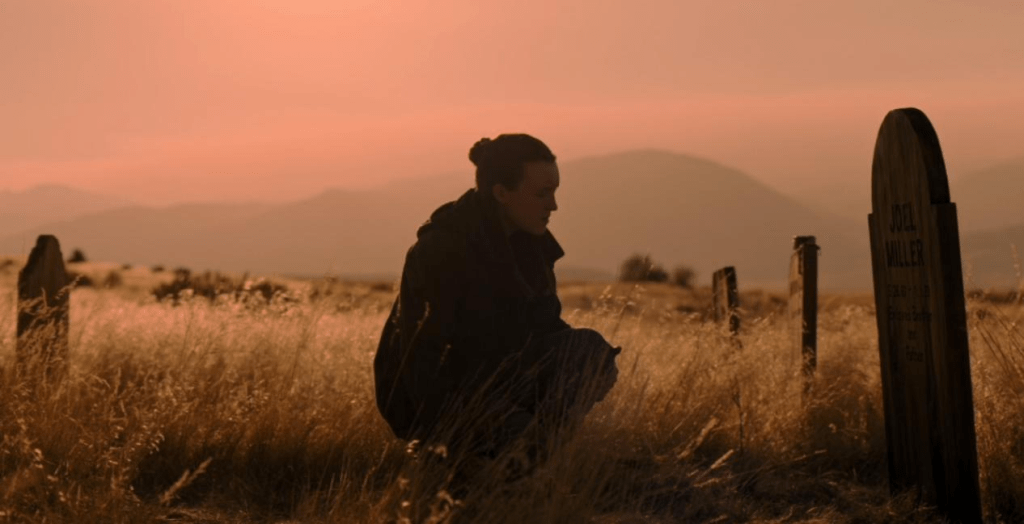
Before leaving, Ellie and Dina visit the graves of those lost. Ellie has a private, emotional goodbye with Joel, placing coffee beans — a small but meaningful tribute — at his grave. It’s one of the episode’s most tender moments, letting both Ellie and the audience sit with mourning we hadn’t fully processed.
On the road, the dynamic between Ellie and Dina deepens. In the quiet of their tent, Ellie waits for affection but is instead met with playful teasing about their New Year’s kiss. The tension is beautifully awkward, capturing the confusion, longing, and vulnerability that often accompany young love in times of chaos.
Continuing toward Seattle, they discover the bodies of the Seraphite group massacred. Ellie fixates on the young girl we got a glimpse at earlier, connecting the senseless violence to the WLF. Justice is no longer just for Joel — it’s for all victims caught in this brutal world.
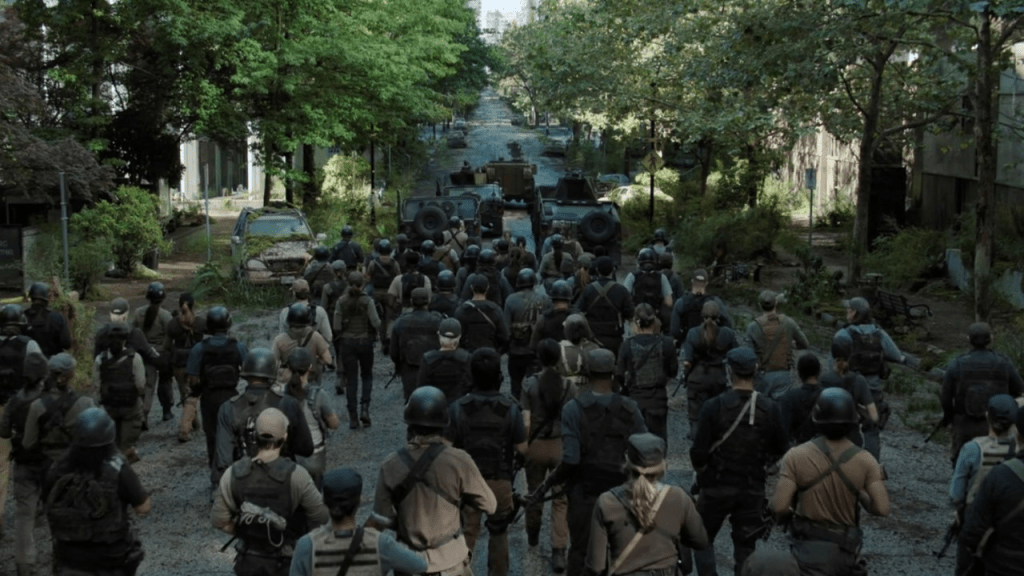
Their journey culminates in a serene overlook of Seattle — seemingly calm, deceptively peaceful. But in the closing shot, we glimpse an ominous reality: heavily armed patrols, military vehicles, and fortified streets.
This mission won’t be as easy as it looks.
Ultimately, this episode continues to explore the complex notions of revenge, grief, and mourning. But what do these emotions truly mean in a post-apocalyptic world?
The loss of Joel in the episode prior brings a new sense of autonomy to Ellie. She is now not only driven to fulfill her need for vengeance, but also forced to step into Joel’s shoes — forging her own path in a world that feels emptier and colder without him.
Where the last season centered on a close-knit relationship between Joel and Ellie, the dynamic now shifts toward Ellie and Dina, introducing a new web of problems and complications — with Joel’s absence lingering heavily behind them.
Meanwhile, we get a glimpse into another community surviving in this broken world. At first glance, they seem like a cult-like religious group, but a closer look reveals them to be peaceful and civil beings, trying to carve out stability amid chaos.
Yet, when the father warns about “Wolves” in pursuit of them, and the daughter cryptically asks if it’s “demons,” we’re left to wonder: What exactly is hunting them?
Ellie’s own internal conflicts also deepen here. Her cognitive dissonance with Seth blooms — she begins to see people as more than one-dimensional. Even someone like Seth, who may have been homophobic toward her, can still share a mutual sense of loss and rage tied to Joel’s death.
On another front, Tommy struggles with the burden of inheriting Ellie’s care, grappling with what it means to raise and protect her now. His conversations with Gail reveal attempts to piece together the often strained, layered bond between Ellie and Joel — a relationship marked by both deep love and unresolved tension.
Finally, Ellie is confronted with another ambiguity: her relationship with Dina.
In their banter during the final moments of the episode, affection and uncertainty intertwine — leaving both Ellie and us questioning: What exactly are they to each other?
Is it friendship? Something more? Or something still undefined, too delicate to name just yet?
As we venture forward, a flood of questions rushes in, stirring both curiosity and dread:
- What do you think awaits Ellie and Dina in Seattle? Will revenge bring closure — or only more loss?
- How do you think Ellie’s grief will shape the choices she makes next?
- Do you believe the council was right to deny Ellie’s request? What would you have done in their place?
- How much of Ellie’s mission is about Joel — and how much is about her own identity now?
- What role do you think the Seraphites will play in the story ahead?
- Will Ellie’s desire for justice eventually clash with her humanity?
- Is vengeance ever truly satisfying — or is Ellie setting herself up for more heartbreak?
- How do you think the show will explore the moral “gray areas” as Ellie and Dina venture into enemy territory?
- Are Ellie and Dina ready for what’s coming — or is the journey about to change them in ways they can’t predict?
 818 Lens